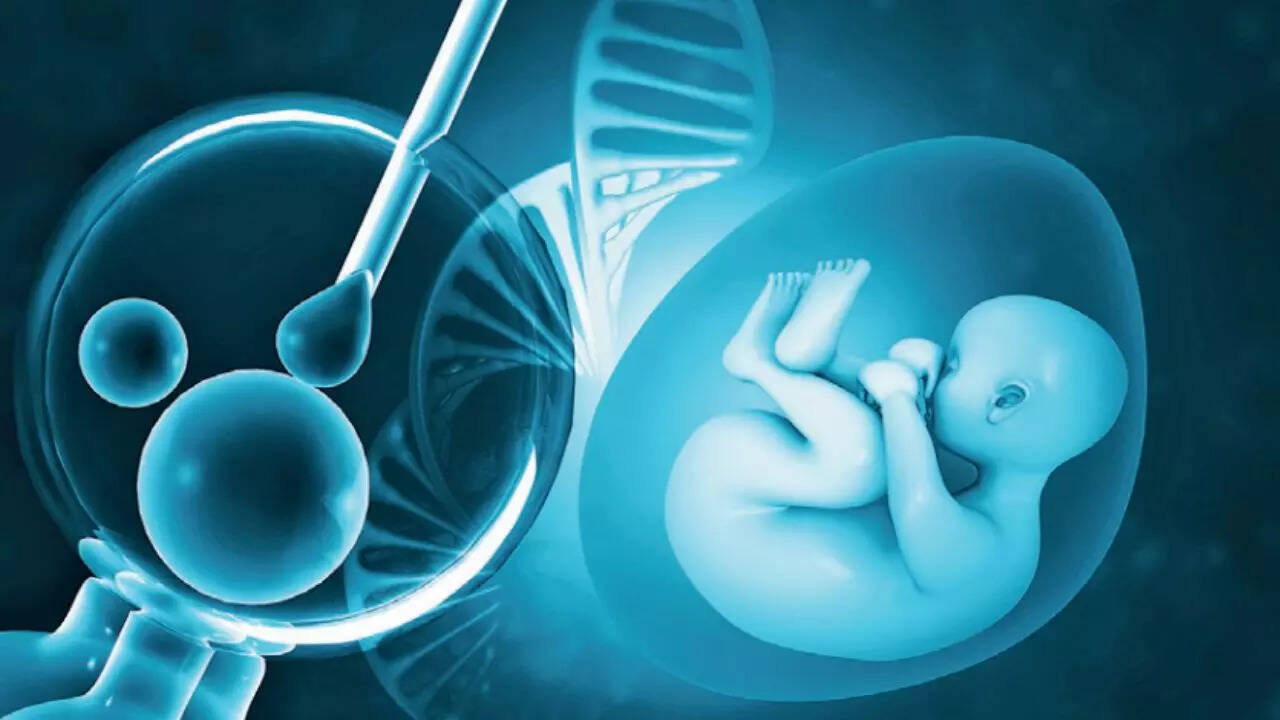
A multi-state investigation into illegal in-vitro fertilisation (IVF) practices has exposed a deeply organised network spanning Maharashtra, Haryana, Gujarat, and Telangana, involving unlicensed clinics, exploited women, and alleged human trafficking. The probe, triggered in Badlapur (Maharashtra), has now expanded to over 30 medical practitioners and multiple fertility centres across Mumbai, Thane, Pune, Baramati, Nashik, Gurgaon, Ahmedabad, and Hyderabad. Police have issued notices to four doctors—two from Mumbai, one from Thane, and one from Baramati—following allegations of unlawful egg extraction, repeated donor exploitation, and financial transactions worth lakhs routed through unregulated channels.
Officials allege that economically vulnerable women were systematically used as egg donors across multiple IVF centres, often in violation of the Assisted Reproductive Technology (Regulation) Act, 2021. This law strictly prohibits repeated egg donation and mandates that donors must be married, aged 23–35, have at least one child, and donate only once in a lifetime. Investigators found that the same donors were repeatedly moved between clinics in Mumbai, Thane, Pune, and Baramati, facilitated by agents and medical intermediaries. “So far, we have issued notices to four doctors. Based on their statements and inquiry findings, notices will be sent to other doctors involved,” stated a senior police officer. Police have identified 30–35 donors linked to each agent, indicating a large-scale, regionally coordinated operation.
In a recent raid in Gurgaon’s Sushant Lok 1, authorities busted an unregistered IVF and surrogacy centre operating without mandatory approvals. During the operation, officials seized registers containing details of 84 frozen embryos, 68 semen samples (including some linked to foreign nationals), and records of egg donations and surrogacy procedures conducted without requisite approvals. The centre allegedly charged up to ₹3 lakh per procedure. Dr. Alka Singh, Chief Medical Officer of Gurgaon, confirmed this was the first FIR lodged in Haryana against an IVF centre. “We found the centre was not registered and was conducting IVF, IUI, and egg donation without approvals,” she said. The investigation is ongoing, with a six-member medical team probing all such centres in Gurgaon.
A parallel investigation has uncovered a disturbing inter-state child trafficking racket linked to IVF centres in Ahmedabad and Hyderabad. A nurse, who worked across multiple IVF facilities for nearly a decade, is alleged to have built a network connecting doctors, clinics, and agents in Hyderabad, Pune, and Ahmedabad. Police allege she targeted childless couples and vulnerable women in tribal regions of north Gujarat—including Poshina, Kheroj, Idar, Danta, and Deesa. Over two years, at least 20 tribal infants were allegedly trafficked to Hyderabad. Babies were reportedly priced based on skin colour and gender, with fair-skinned infants sold for up to ₹7 lakh and others for ₹2–3 lakh.
The Enforcement Directorate (ED) has also identified a structured exploitation chain in which women initially recruited as clinical trial participants or egg donors were later absorbed into criminal networks. One accused, previously a clinical trial participant paid ₹15,000–20,000 per trial, later acted as a surrogate mother twice and donated eggs on two occasions. The ED found that women in debt or distress were recruited into a layered system involving commissions ranging from ₹5,000 to ₹50,000. Surrogates and even relatives were allegedly used to route payments and facilitate illegal transactions.
Egg donation in India is regulated under the Assisted Reproductive Technology (ART) Act, 2021, which prohibits commercial sale, limits donations to once per lifetime, and requires donors to be married and aged 23–35. Despite these laws, widespread violations have been exposed across Maharashtra and Haryana, with repeated use of the same donors and hormonal injections administered without proper medical supervision—often at agents’ residences before procedures at clinics.
Authorities emphasize that these cases expose critical gaps in enforcement and the urgent need for stricter monitoring of fertility clinics nationwide. With investigations expanding across seven states and involving over 30 doctors, the scale of the illegal IVF and egg trade underscores systemic vulnerabilities in India’s reproductive healthcare oversight—leaving vulnerable women at risk of exploitation and trafficking.