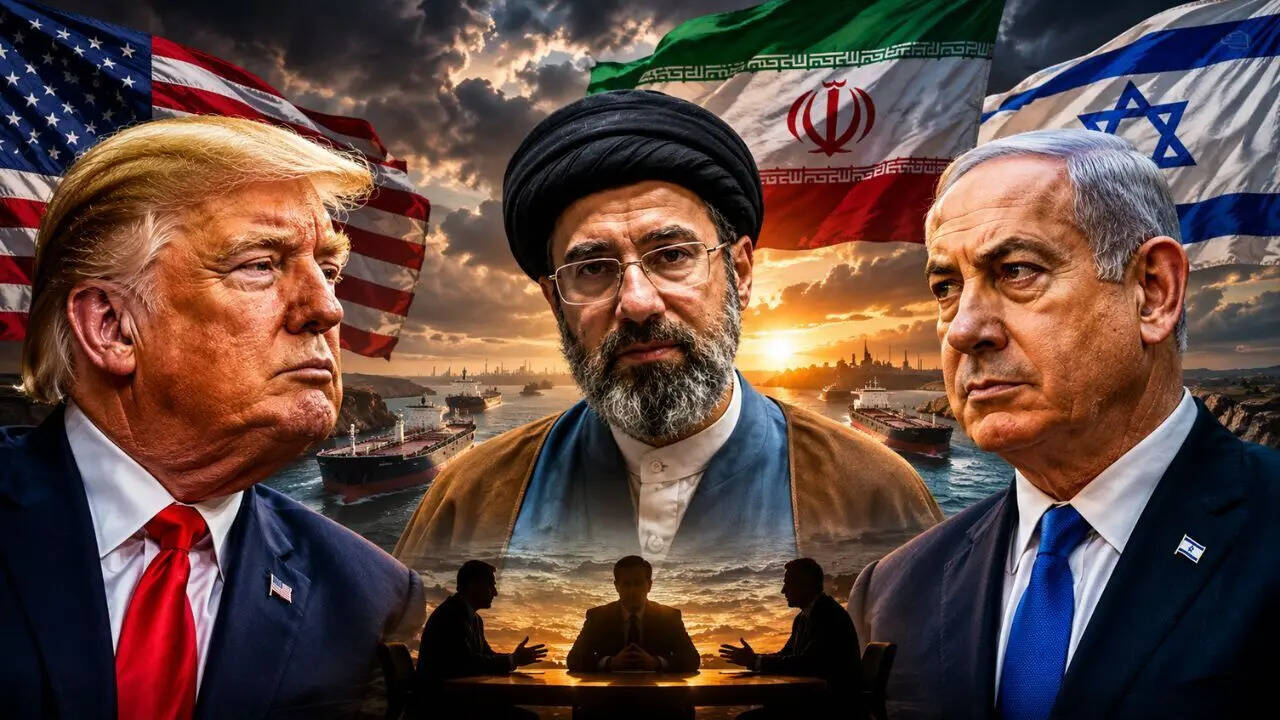
A potential agreement between the United States and Iran to end the ongoing conflict and ease regional tensions remains uncertain, with senior US officials acknowledging that negotiations are fluid and could collapse despite reported progress. Speaking to Axios, a senior US official said the proposed framework—aimed at reopening the Strait of Hormuz and preventing further escalation—still requires final approval from Iran’s leadership, including Supreme Leader Ayatollah Ali Khamenei. The official described the situation as “very good” but cautioned that “there are ways in which the deal can be undermined,” signaling a more cautious tone from the administration of US President Donald Trump. On Sunday, Trump himself stated on Truth Social that he had instructed negotiators “not to rush into a deal,” adding that the US naval blockade would remain in place “until an agreement is reached, certified, and signed.”
The proposed agreement centers on a trade-off: the US would lift its naval blockade in exchange for Iran reopening the Strait of Hormuz, a critical shipping route for global oil supplies. According to the US official, Iran has agreed in principle to dispose of its enriched uranium stockpile, though discussions continue over implementation and scope. The US seeks a commitment covering nearly 2,000 kilograms of Iran’s enriched uranium, not just the 450 kilograms enriched to near-weapons-grade levels. “We want to see a substantial commitment to forgo enrichment,” the official stated. “We think we will get it. We feel good about where we are on the broad commitments regarding the enrichment issue.”
Iranian President Masoud Pezeshkian reaffirmed Tehran’s stance on Sunday, telling the world that Iran is “ready to reassure… that we are not seeking nuclear weapons,” but warned that negotiators “will not compromise when it comes to our country's honor and dignity.” Iranian state media accused the US of creating obstacles, particularly regarding the release of Iran’s frozen assets, which remain a sticking point. Semi-official news agency Tasnim reported that Washington has refused to accept certain clauses in a proposed memorandum of understanding (MoU), raising doubts over the deal’s prospects. Iranian Foreign Ministry spokesman Esmaeil Baghaei told state-run IRIB TV on Saturday that both sides were working to finalize a 14-clause MoU focused on ending the war, with an aim to reach a final agreement within 30 to 60 days.
The structure of the proposed agreement reportedly links sanctions relief to Iran’s nuclear concessions. “No dust, no dollars,” the US official said. “If no highly enriched uranium is given [up], they will get no relief.” Relief, including the unfreezing of funds, would be phased in based on Iranian compliance. Meanwhile, US Secretary of State Marco Rubio suggested a deal could be announced “today” (May 25, 2026), though he cautioned that delays were possible. Speaking to reporters in New Delhi, Rubio said, “We thought we might have some news last night, maybe today… We have what I think is a pretty solid thing on the table in terms of their ability to open up the straits.” He also emphasized that Israel retained the right to defend itself amid ongoing regional tensions.
The emerging framework has drawn criticism from both Republican lawmakers and conservative commentators in the US. Several Republican senators, including Roger Wicker (chairman of the Senate Armed Services Committee), Thom Tillis, Lindsey Graham, and Ted Cruz, questioned whether Iran could be trusted to honor commitments, calling for a “diplomatic solution” rather than recognition of Tehran as a dominant force. Senator Rand Paul, a critic of Trump, urged patience, while Democratic senators accused the President of being “played as a fool,” arguing the deal would merely restore the pre-war status quo. Trump responded to the criticism by dismissing detractors as “losers,” asserting that the deal reflects an “America First” approach.
Regional dynamics continue to complicate the picture. Israeli strikes pounded southern and eastern Lebanon on Sunday, killing two people, including a paramedic from a Hezbollah-affiliated group, as the death toll in the war since March 2 reached 3,123, according to Lebanon’s health ministry. Hezbollah leader Naim Qassem reiterated calls for public protests to pressure Lebanon’s government, while US Secretary of State Rubio accused Hezbollah of trying to “plunge Lebanon back into chaos” and condemned its “reckless call to overthrow Lebanon’s democratically elected government.” Meanwhile, leaders from Saudi Arabia, the UAE, Qatar, Egypt, Jordan, Bahrain, Turkiye, and Pakistan joined a call with Trump on Saturday to discuss the evolving deal.
As of May 25, 2026, the timeline for a breakthrough remains unclear. Both sides have indicated willingness to finalize terms, but structural hurdles—including Iran’s decision-making opacity and US insistence on phased sanctions relief—suggest that a comprehensive agreement may still be days away. With regional stakeholders watching closely and domestic political pressures mounting on both sides, the path to de-escalation remains fragile and contingent on last-minute compromises.