•Bhopal’s goat farms rear elite Kota and Jamnapari bucks worth lakhs, selected for size, coat, and frame months in advance.
•The goats receive VIP treatment including temperature-controlled sheds, tailored diets, daily walks, and massages until delivery.
•Buyers from Mumbai, Pune, Delhi, Hyderabad, and Lucknow bid for the animals based on photos and videos shared post-Eid-ul-Fitr.
•Unveiling events feature garlanded goats on hydraulic platforms in front of hundreds of spectators, followed by air-conditioned transport to buyers’ homes.
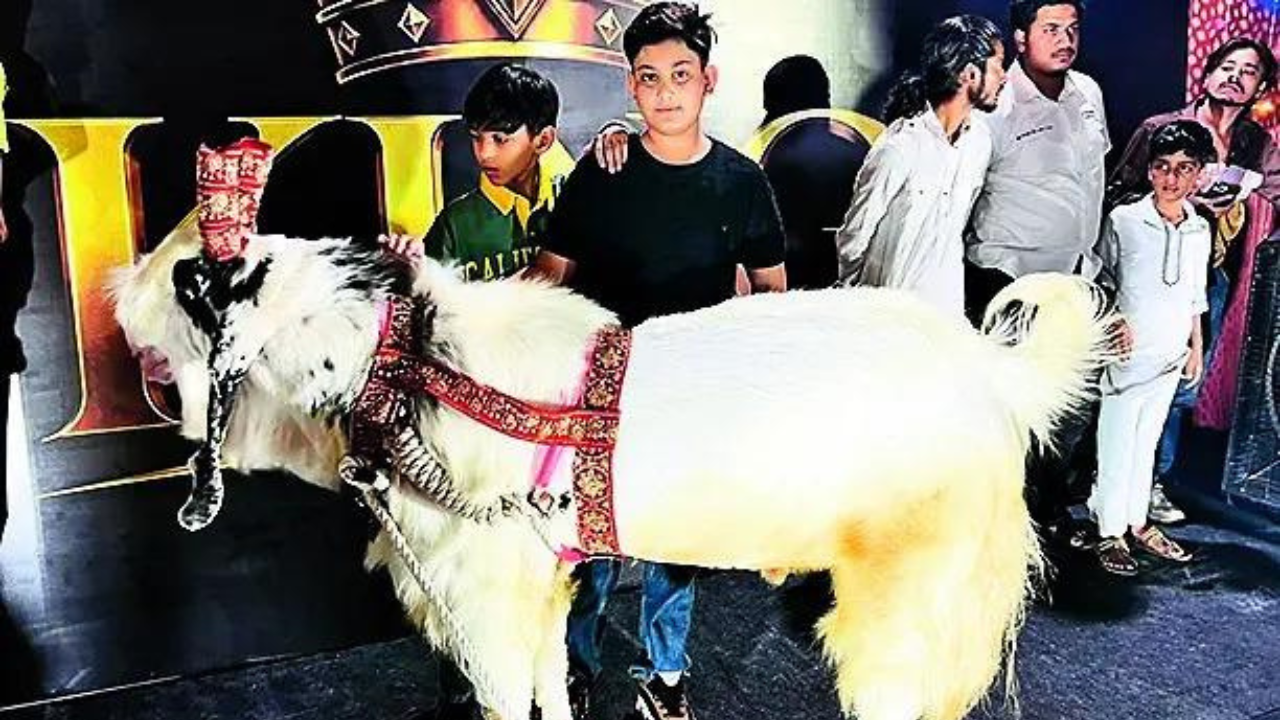
•Owais Kagzi from Mumbai bought a 170-kg Kota goat named ‘King’ for an undisclosed premium price, praising Bhopal’s breeding expertise.
•Another buyer from Nagpur paid ₹3.75 lakh for a 160-kg buck, highlighting the unique cultural passion for show goats in Bhopal.
•For farmers, Eid-ul-Azha is a high-stakes spectacle where their goats become temporary superstars, rivaling any film star in scale and glamour.
BHOPAL: As Eid-ul-Azha approaches, one city in central India transforms into a glamorous stage where prized goats take center stage—not as ordinary livestock, but as coveted showpieces worth lakhs of rupees. In Bhopal, the weeks leading to the festival are marked not by car launches or celebrity performances, but by grand goat unveiling events that rival major entertainment extravaganzas in scale and spectacle.
These goats are no ordinary animals. Reared in strict secrecy, they are the result of months of meticulous planning and care. Selected from farms across the city, the chosen few are picked for their impressive appearance—long ears, glossy coats, and muscular frames. The Kota and Jamnapari breeds dominate the scene, known for their ability to grow up to 110 cm in height and weigh between 140 to 180 kg when given optimal nutrition. “These goats are raised like athletes,” says Mohd Sarwar, owner of SF Ali Goat Farm, who has been in the trade for over a decade. “Their growth is tracked closely, their diet is carefully planned, and their environment is kept pristine.”
The journey of these elite bucks begins quietly, long before the festival season. Goat farms across Bhopal set aside select kids, preparing them for a life of luxury. The chosen animals are given temperature-controlled sheds, tailored diets rich in grams, leaves, and dry fruits, and even daily walks and massages. Public appearances are avoided to ensure they remain in peak condition. Their names often draw inspiration from Bollywood—popular choices include Sikandar, Baba, Raees, Pathan, and King—adding a touch of star power to their persona.
As Eid-ul-Fitr passes, high-resolution photos and videos of the goats are shared with prospective buyers in major cities like Mumbai, Pune, Delhi, Hyderabad, and Lucknow. What follows is intense bidding wars, with buyers vying for the chance to own these prized animals. Once the highest bidder is decided, the goat remains in Bhopal under round-the-clock care until just 10 to 15 days before Eid-ul-Azha. Only then do the buyers fly in for the grand delivery day.
The unveiling events are nothing short of spectacular. Held in front of hundreds of onlookers, the goats are paraded on hydraulic platforms—once used for wedding decorations—decorated in garlands, and lowered onto spotlit stages. Crowds gather with phones raised, eager to capture a glimpse of these “secret superstars.” The goats are blessed, garlanded again, and formally handed over to their new owners. From there, they travel home in air-conditioned vans, ensuring their comfort even during the journey.
One such buyer, Owais Kagzi from Mumbai, flew in recently to collect ‘King’, a 170-kg Kota goat. “I’ve loved tall goats since childhood,” he shared. “Bhopal’s breeders know how to unlock their full potential. That’s why I come here every year.” Another anonymous buyer from Nagpur, who paid ₹3.75 lakh for a 160-kg buck, emphasized the unique culture surrounding these animals. “People here understand goats. They love them. Where else do hundreds turn up just to watch a goat being unveiled? That love brings me back.”
For Bhopal’s goat farmers, Eid-ul-Azha is not just a religious festival—it’s their version of the Super Bowl. Months of dedicated care culminate in a single, dazzling moment where their animals become the stars of the show. For a few hours, the spotlight shines not on film celebrities, but on the towering, well-groomed goats of Bhopal, celebrated as icons of luxury and prestige.