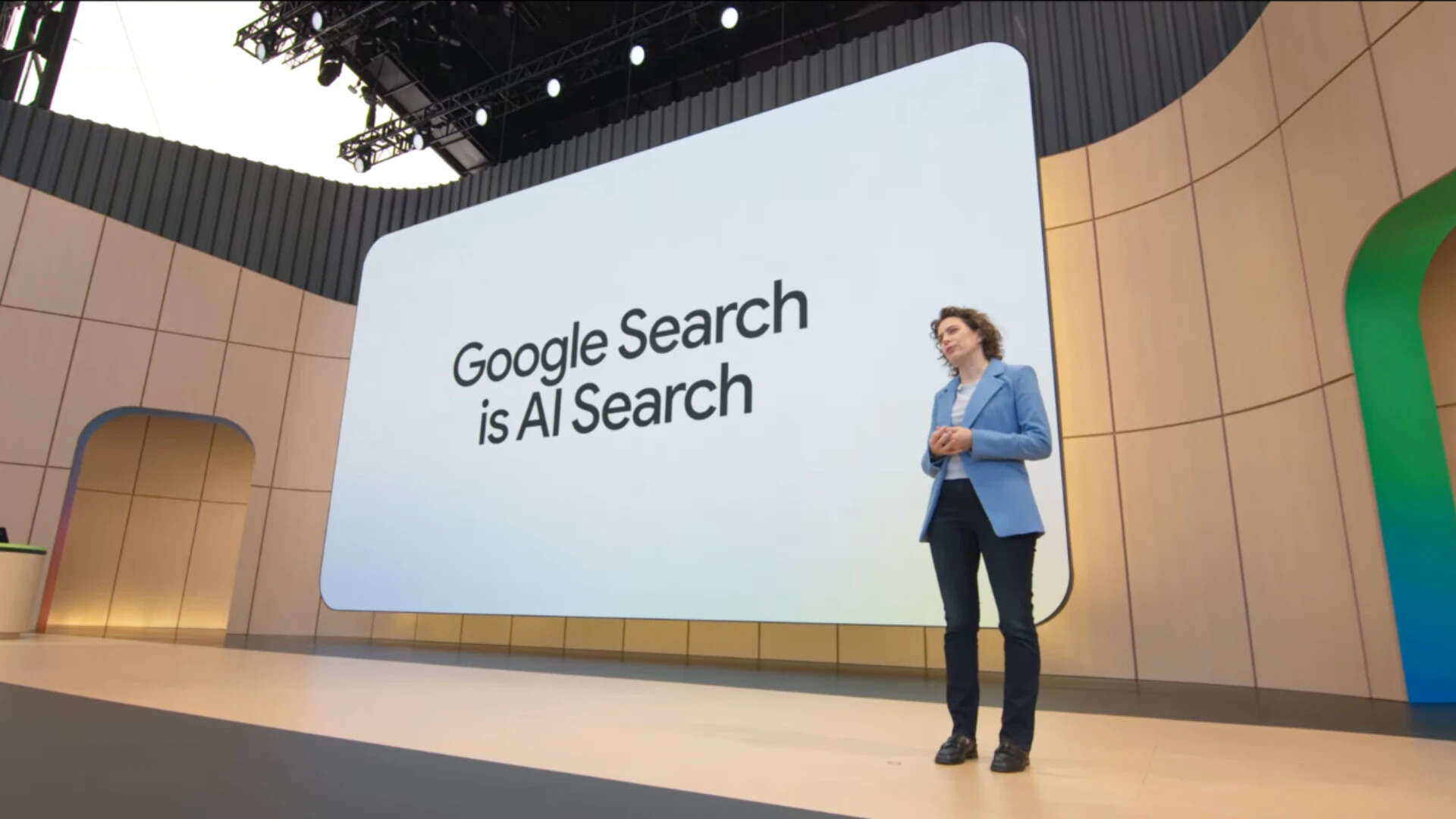
Google Search is undergoing its most significant transformation in over 25 years, as revealed by Liz Reid, Vice President of Search, at Google I/O 2026 in Mountain View on May 20, 2026. The update, powered by Gemini 3.5 Flash, shifts the focus from traditional blue links to AI-generated summaries, interactive widgets, and real-time information agents. The search box itself has been redesigned—it now expands as users type, accepts images, videos, and even open Chrome tabs, and prioritizes full conversational questions over keywords.
A central feature of this overhaul is the introduction of "Information Agents," which will be available to subscribers of Google’s AI plans starting this summer. These agents continuously monitor the web for specific user requests, such as tracking apartment listings within a budget or sneaker drops from an athlete, and notify users when a match is found. Additionally, Google is rolling out "Generative UI," a free tool for all users this summer that dynamically creates interactive interfaces based on user queries. For subscribers, Google’s agentic development platform, Antigravity, can generate custom "mini-apps" on demand, such as fitness trackers, wedding planners, or moving checklists.
The evolution of Google Search over the past two years sets the stage for this transformation. In May 2024, Google introduced AI Overviews, which provided AI-generated summaries above traditional search results for complex queries. Despite early inaccuracies—such as suggesting glue on pizza or incorrect dates—Google refined the feature, and by I/O 2025, it launched AI Mode, a chatbot-like interface that synthesizes answers from parallel web queries. AI Mode has since gained over a billion monthly users, while AI Overviews now serves 2.5 billion users. The 2026 update integrates these layers seamlessly: users can transition from an AI Overview directly into AI Mode without switching interfaces.
Google CEO Sundar Pichai has emphasized that users who engage with AI features tend to search more frequently, debunking concerns that AI would reduce search volume. Liz Reid further explained that lowering the barrier to asking questions—by making the process more conversational and intuitive—encourages users to ask questions they previously wouldn’t have bothered to type. For example, Google Lens eliminated the need to describe objects in words, and the new tools aim to unlock similarly transformative behaviors, such as planning trips or organizing events through natural language queries.
However, the shift to AI-powered search is not without challenges. Google’s own testing of Gemini 3 revealed that the model produced incorrect information 28% of the time, though AI Overviews performs better due to its reliance on live web data. Real-world inaccuracies have also surfaced. For instance, an AI Overview incorrectly claimed the Bob Marley Museum opened in 1987 (it opened in 1986), cited a Facebook post that didn’t mention the opening, and misidentified rivers and hall-of-fame inductions. Critics argue that while AI summaries are fast and convenient, they often lack the depth and serendipity of traditional search results. Google has acknowledged these limitations but maintains that the trade-off is worth it for the majority of users.
Sundar Pichai has suggested that Google aims to phase out blue links gradually rather than abruptly, though their prominence is diminishing. Meanwhile, some users have reported bizarre glitches, such as typing words like "disregard" or "ignore" triggering chatbot responses instead of search results. Despite these issues, the convenience of AI-powered search has proven irresistible. As one columnist noted, even critics of AI Overviews have conceded that the feature is now superior for many tasks, such as finding old articles or explaining unfamiliar concepts.
The broader implications of this transformation extend beyond user experience. Publishers have already seen a decline in referral traffic due to AI Overviews, raising concerns about the sustainability of the open web. As Google Search evolves from a "place" to a "service," the trade-off between convenience and the organic discovery of information becomes increasingly apparent. For users, the shift offers speed and efficiency, but for the web ecosystem, it poses questions about the future of content creation and discovery.