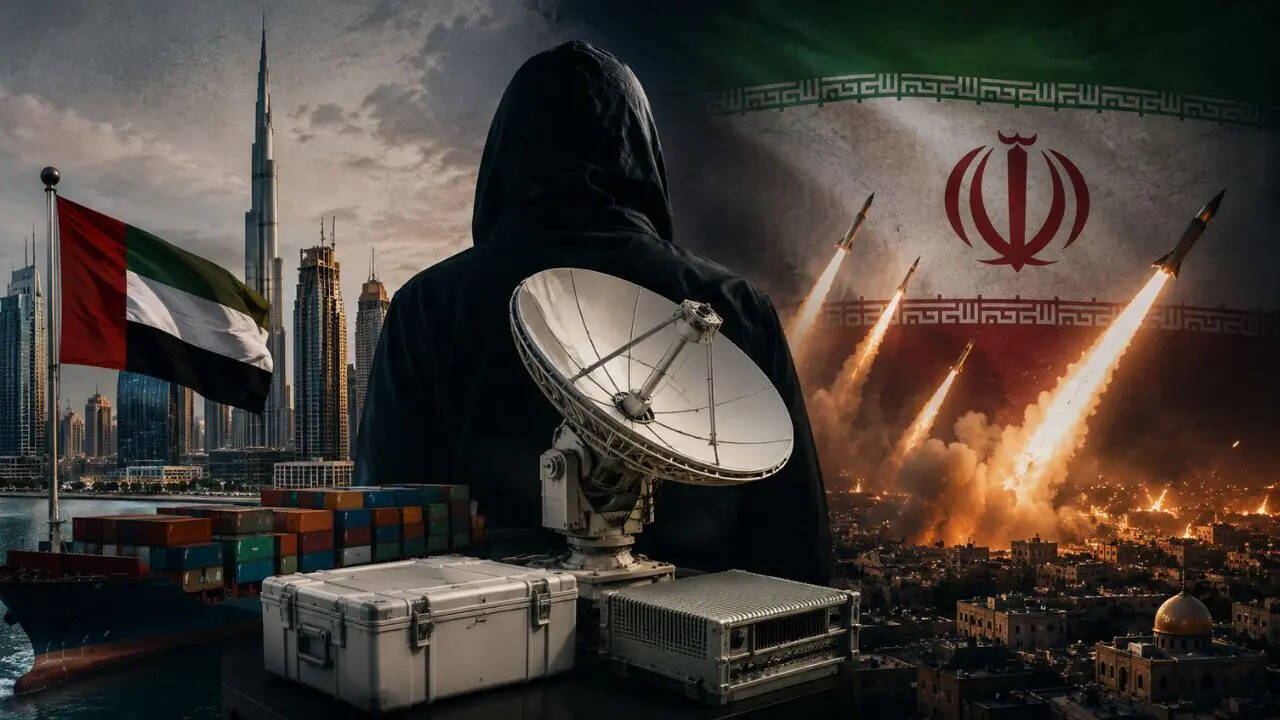
•Iran's elite Revolutionary Guards secretly acquired advanced Chinese satellite communication equipment via a UAE-based procurement network.
•The equipment, linked to Tehran's drone and missile programme, was obtained through a company operating from the emirate of Ras al Khaimah.
•The UAE has traditionally maintained a hardline posture towards Tehran, but the country remains a crucial commercial hub for Iranian businesses operating offshore.
•The shipment was consigned to Ertebatat Faragostar Kish (EFK), an Iranian telecommunications company, and was linked to Saman Industrial Group, an entity sanctioned by the US Treasury.
•The disclosures are likely to intensify concerns among Western governments over the use of Gulf commercial hubs and international logistics networks to circumvent sanctions.
•The UAE may face renewed pressure to tighten oversight of companies operating within its free trade zones amid fears that sensitive military technology continues to flow into Iran.
A recent investigation by the Financial Times has exposed a secretive procurement network used by Iran's elite Revolutionary Guards to acquire advanced Chinese satellite communication equipment. The equipment, linked to Tehran's drone and missile programme, was allegedly obtained through a company operating from the United Arab Emirates (UAE). The revelations come as a significant blow to Western governments, which have been monitoring Iran's military procurement ecosystem for years.
According to leaked commercial and shipping records reviewed by the Financial Times, the Revolutionary Guards Aerospace Force obtained military-grade Chinese satellite antenna equipment through Telesun, a company based in the emirate of Ras al Khaimah. The equipment, manufactured in China, was shipped from Shanghai and routed through Dubai's Jebel Ali container port before eventually reaching Iran. The UAE has traditionally maintained a hardline posture towards Tehran, but the country remains a crucial commercial hub for Iranian businesses operating offshore.
The records show that in late 2025, the IRGC Aerospace Force acquired a 4.5-meter motorized satellite antenna produced by Chinese manufacturer StarWin. The consignment, weighing nearly 1.8 tonnes, was described in customs records as "antenna and accessories." The equipment was initially transported aboard the Chinese container ship Zhong Gu Yin Chuan from Shanghai to Dubai's Jebel Ali Container Terminal 1. Shipping records reviewed by the newspaper showed the vessel arrived in Dubai on August 28, where it unloaded a container later collected by an Iranian vessel named Rama III.
Documents indicate Rama III docked at the same quayside on November 23 before departing a day later carrying the shipment towards Iran. However, an analysis of maritime GPS data and satellite imagery suggests that the Iranian vessel deliberately transmitted false navigational information in an apparent attempt to conceal its movements. The discrepancy strongly suggests that the vessel was "spoofing," a deceptive maritime practice in which ships broadcast false location data to disguise their true routes and destinations. On November 29, satellite images captured a vessel matching the size, shape, and appearance of Rama III docked at Iran's Shahid Rajaee port in Bandar Abbas.
The shipment was consigned to Ertebatat Faragostar Kish (EFK), an Iranian telecommunications company. According to a contract reviewed by the FT, Telesun procured the equipment on behalf of EFK for a project linked to Saman Industrial Group, another Iranian entity. The US Treasury sanctioned Saman in December 2023, alleging that the company functioned as a commercial front for the Aerospace Force Self Sufficiency Jihad Organization, the research and development wing responsible for the Guards' ballistic missile, drone, and electronic warfare programmes. The European Union has also sanctioned the Self Sufficiency Jihad Organization, alleging it supplied Iranian drones to Russia.
The disclosures are likely to intensify concerns among Western governments over the use of Gulf commercial hubs and international logistics networks to circumvent sanctions imposed on Iran's military procurement ecosystem. The revelations may also place renewed pressure on the UAE to tighten oversight of companies operating within its free trade zones amid fears that sensitive military technology continues to flow into Iran despite years of restrictions and monitoring efforts.