Nearly three months after open conflict erupted between Israel and Iran on February 28, a fragile ceasefire has largely held since April 8, but diplomatic efforts to formalise a broader agreement remain deadlocked over core issues. Despite repeated claims of progress from Washington and Tehran, senior US officials now acknowledge that major sticking points—particularly uranium enrichment, sanctions relief, Hezbollah’s role, Lebanon’s stability, and the balance of power in West Asia—continue to derail finalisation of a framework that could end hostilities and ease global energy disruptions.
On Monday, US Secretary of State Marco Rubio, speaking in New Delhi, struck a cautiously optimistic tone but warned that Washington will only accept a “good agreement” with Tehran. “The US will give diplomacy every chance to succeed before exploring the alternatives,” Rubio stated, calling the current proposal “a pretty solid thing on the table.” He highlighted two immediate priorities: Iran’s commitment to reopen the Strait of Hormuz and the initiation of time-limited nuclear negotiations. However, Rubio cautioned that a comprehensive nuclear deal cannot be achieved quickly. “A nuclear deal couldn't be achieved in 72 hours on the back of a napkin,” he told *The New York Times*, reflecting growing recognition in Washington that uranium enrichment may become the most contentious issue.
President Donald Trump’s public statements have oscillated sharply. On Saturday, he claimed on Truth Social that “Final aspects and details of the Deal are currently being discussed, and will be announced shortly.” Yet within 24 hours, he shifted tone, posting, “I have informed my representatives not to rush into a deal… Both sides must take their time and get it right. There can be no mistakes!” Trump also reaffirmed that the US naval blockade on Iran would remain in effect until a formal, certified, and signed agreement is reached. This abrupt change underscored deep uncertainty, especially after reports suggested Iran had not yet accepted key US demands on uranium and maritime access.
Iran has consistently framed the talks not as capitulation to military pressure but as a strategic move to end the war while protecting what it calls sovereign rights, regional influence, and national security. Iranian Foreign Ministry spokesman Esmaeil Baghaei confirmed that “a large portion” of the agenda has been concluded but stressed that a final accord is still far from imminent. “We have reached a conclusion on a large portion of the discussion topics—this is correct—but this does not mean that the signing of an agreement is imminent,” he said. Baghaei also drew a clear line between the current ceasefire discussions and future nuclear negotiations, emphasizing that uranium enrichment and dismantlement are not currently on the table. “The focus of the negotiations is on ending the war, and at this stage we are not discussing the details of the nuclear issue,” he stated. Tehran further accused Washington of shifting positions repeatedly, saying such inconsistency complicates finalisation.
Iranian President Masoud Pezeshkian reiterated that Iran does not seek nuclear weapons but refused to commit publicly to abandoning uranium enrichment or dismantling its nuclear infrastructure. “We are ready to assure the world that we are not after a nuclear weapon,” he said, while insisting Iran retains a legitimate and peaceful right to nuclear technology. Iran’s embassy in India reinforced this stance, calling nuclear technology an “inalienable” right that “will never be relinquished.”
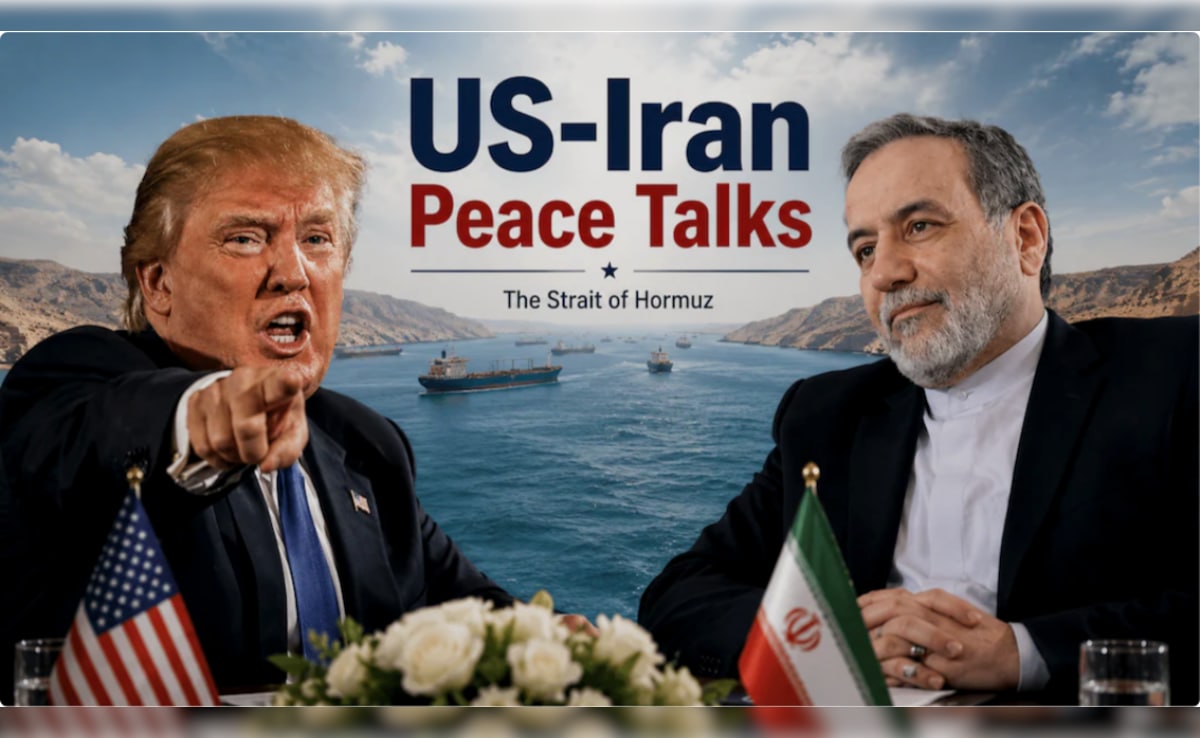
The Strait of Hormuz has emerged as the most immediate flashpoint in the negotiations. The waterway, through which nearly one-fifth of the world’s oil and gas shipments pass, has seen severe disruptions since the conflict escalated, compounded by US naval blockades and Iranian controls on Gulf shipping. Under the proposed framework, Iran would gradually reopen the strait while the US would lift its blockade on Iranian ports. Rubio confirmed that reopening the strait is central to the proposed deal: “We have what I think is a pretty solid thing on the table in terms of their ability to open up the straits.” However, Iran insists it retains sovereign authority over maritime access and rejects any suggestion that it has unconditionally agreed to reopen the strait or surrender its uranium stockpile.
Senior Iranian adviser Mohsen Rezaei framed control over the Strait of Hormuz as a “legal right” essential to national security. “Our fighters have their hands on the trigger today, and our negotiators are working to secure the rights of the Iranian people,” he said. Iranian state-linked media, including Fars News Agency, have vigorously denied reports that Tehran has agreed to unconditional reopening or full surrender of its uranium stockpile. Instead, Iran is pushing for a new regional governance mechanism over Hormuz rather than a return to the pre-war status quo, signaling its intent to maintain strategic leverage even as talks continue.
With military threats and diplomatic negotiations unfolding in parallel, both sides are negotiating from positions of pressure. While the ceasefire has held, the absence of a final agreement leaves global energy markets on edge and raises the risk of renewed escalation. The coming weeks will be critical as negotiators attempt to bridge gaps over sovereignty, security, and sanctions—issues that go far beyond the immediate crisis and into the heart of West Asia’s fragile geopolitical order.