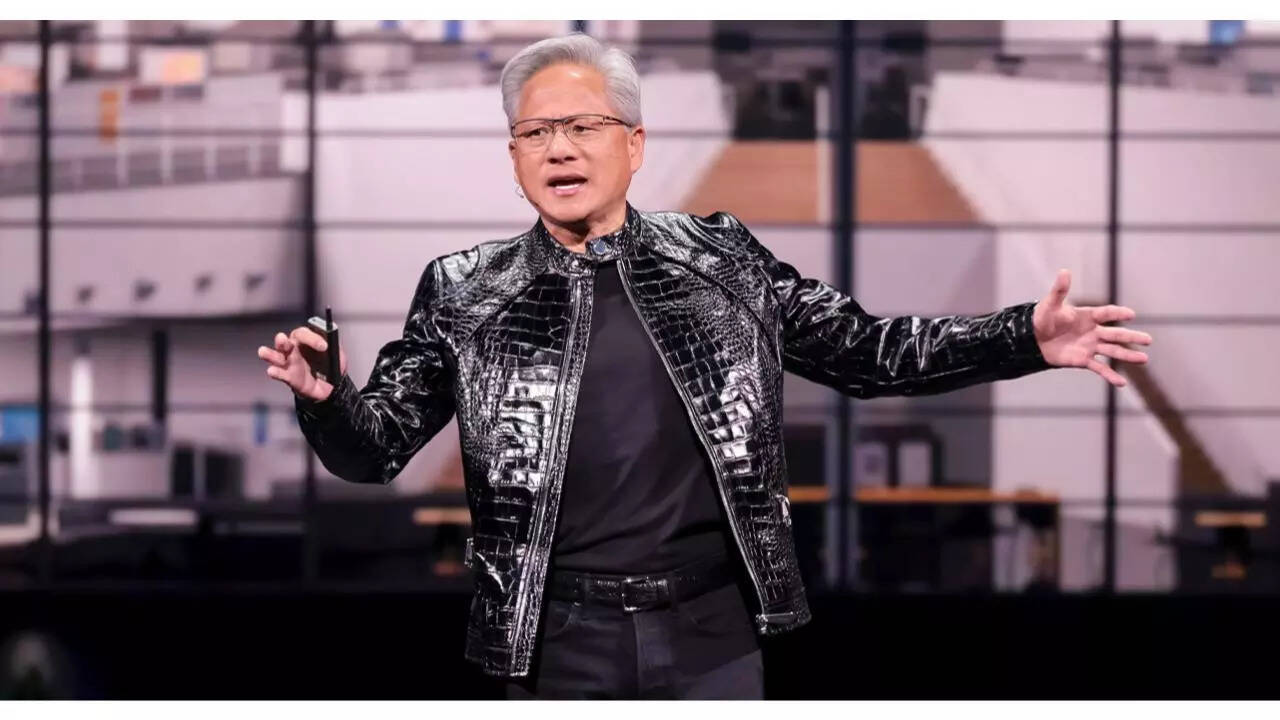
Nvidia co-founder and CEO Jensen Huang has opened up about the years of hardship, humiliation, and personal sacrifice that shaped the rise of the world’s most valuable semiconductor company. Speaking on the *How I Built This* podcast with Guy Raz, Huang admitted that if he had known the full extent of the pain involved, he would never have started Nvidia again. Founded in 1993 and taken public in 1999, Nvidia now commands a market capitalization of over $5.3 trillion and stands at the forefront of the AI revolution.
Huang reflected on the emotional toll of building a company, emphasizing that the journey was far from glamorous. “Suppose I knew everything then that I now know — how hard it is and all of the pain and suffering and all the embarrassment and humiliation and all the setbacks… The answer, absolutely not,” he said. He pointed out that many founders tend to understate the emotional burden of entrepreneurship, focusing instead on the eventual success rather than the years of struggle.
One of the most challenging periods for Nvidia came in the mid-2010s, when the company’s stock collapsed as it heavily invested in CUDA, the software platform that later became foundational for AI. The 2008 financial crisis also hit hard, with Nvidia’s shares plummeting by 85% from their peak. “It was embarrassing. It was humiliating. You’re the only face that everybody hates. Your employees are probably embarrassed for you,” Huang recalled. The company faced existential crises in its early years, including failed product launches, layoffs, and near-bankruptcy.
A critical moment came in 1996, when Nvidia nearly went out of business after failing to deliver a graphics chip for Sega, which had invested $5 billion to keep the company afloat. This near-collapse underscored the fragility of Nvidia’s early years and the high stakes of the semiconductor industry.
Beyond the business challenges, Huang admitted that the personal cost was immense. He missed many of his children’s karate tournaments while juggling nonstop work and graduate studies at Stanford. “I missed a lot,” he said, crediting his wife for managing family responsibilities during those demanding years.
Huang shared his survival strategy: focusing forward and letting go of past setbacks. “I spent all my time forgetting yesterday. What do they teach athletes? Forget the last point,” he explained. Despite the hardships, he credited Nvidia’s success to a steadfast belief in ideas that others dismissed—particularly the vision that graphics chips could power computing far beyond video games.
“A lot of people forget the pain and suffering necessary, the endurance necessary to do something great,” Huang said. “It is because you’re always looking forward and forgetting the past.”
His reflections offer a rare glimpse into the human side of building a tech titan, highlighting the resilience, sacrifices, and unwavering conviction required to create an industry leader.