•New Tamil Nadu textbooks for Classes I–III emphasize experiential learning through stories, songs, games, and activities.
•The revised syllabus, introduced in December 2025, replaces separate Ennum Ezhuthum categories with a unified, joyful learning framework.
•Textbooks include a socio-emotional component, with teachers trained to support students through value education and inclusive discussions.
•The curriculum promotes gender equality and diverse family representations, including single-parent households.
•A teachers’ handbook with QR-linked video lessons helps educators teach across multiple grades efficiently.
•Master teachers are training block-level educators starting June 1, ahead of school reopening on June 4.
•The initiative aims to build both academic competence and character through integrated life skills and values.
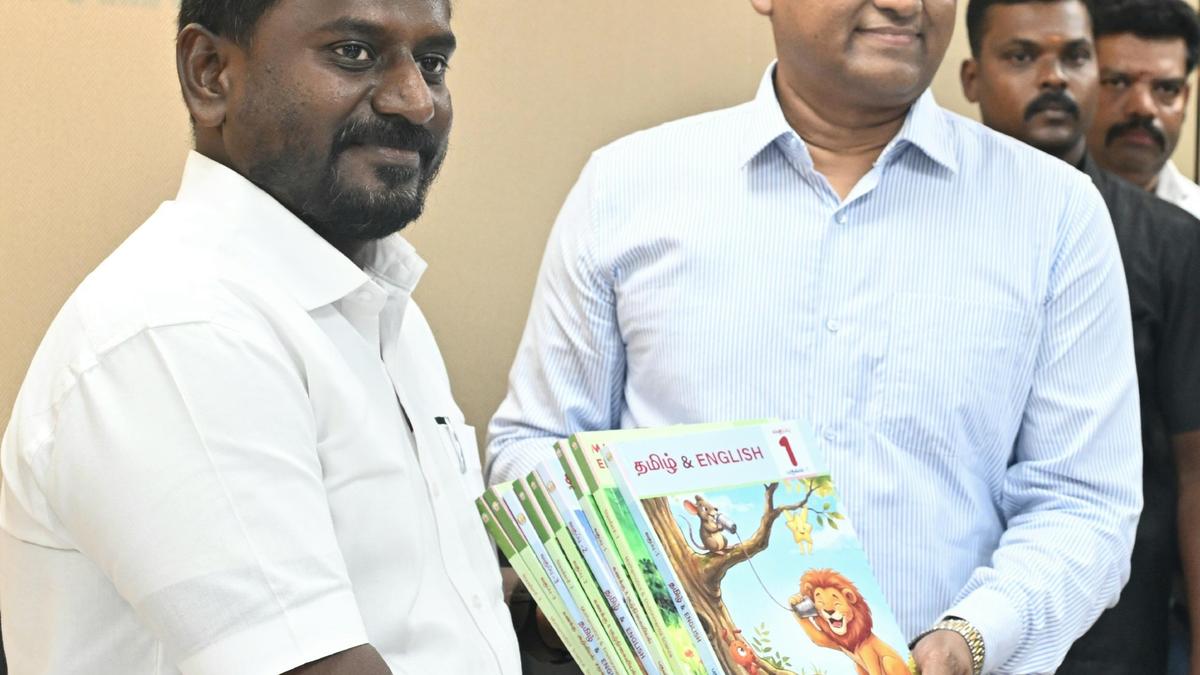
Chennai, May 25, 2026: The Tamil Nadu School Education Department is set to introduce vibrant, activity-based textbooks for students in Classes I to III, marking a shift from rote learning to experiential and joyful education. The new textbooks, to be formally released by School Education Minister Rajmohan and Secretary B. Chandra Mohan at the Secretariat in Chennai on May 27, are aligned with the revised syllabus introduced in December 2025. These books will be used when schools reopen on June 4.
The restructuring of the curriculum is centered around the state’s existing Ennum Ezhuthum initiative, which previously operated with four separate categories and distinct workbooks. The updated approach consolidates these into a single, cohesive framework aimed at moving children away from memorization toward understanding and real-life application. “The fundamental driver was to move the child away from memorising lessons for examinations,” said B. Chandra Mohan. “We wanted the child to learn by understanding, enjoying and applying the learning in his life.”
Each concept is introduced through engaging methods such as storytelling, rhymes, songs, games, conversations, and creative activities. The textbooks are designed to emotionally connect with children and involve them actively in the learning process. The new curriculum also includes a dedicated socio-emotional learning component, where social skills are nurtured through classroom discussions and activities. Teachers are trained to identify withdrawn students and support them through value education classes. “When a teacher notes that a child is not very participative, the teacher will spend time with them in other classes, such as value education, to get the child to open up,” explained an official from the School Education Department.
Beyond literacy and numeracy, the textbooks integrate values, life skills, and age-appropriate motor skills. “Along with literacy and numeracy, children also learn empathy, teamwork, discipline, cooperation and respect for others, because every lesson must build both competence and character,” said Chandra Mohan. The books feature small illustrations at the end of each page, reinforcing themes such as sharing and cleanliness.
A key highlight of the new textbooks is their commitment to inclusivity and gender equality. Officials pointed out that Tamil Nadu has been depicting gender-equal roles in textbooks for the past decade, and this continues in the new edition. The books showcase men participating in household chores and women in professional roles. They also represent diverse family structures, including single-parent households. One example shows a working mother in a bank and her child counting the mother and the family cat as a “whole family,” reflecting the reality of many children’s lives. “Many children come from single-parent households; we need to show representation and validate them too,” said the official.
To support teachers in delivering the new curriculum, the State Council of Educational Research and Training (SCERT) has developed a comprehensive teachers’ handbook. This guide not only provides lesson plans but also includes strategies for addressing student questions. It offers additional stories, songs, and methods to teach multiple classes simultaneously—a common scenario in government schools where a single teacher may handle students from different grades in one classroom.
The handbook is supplemented by QR codes that link to video lessons and model teaching demonstrations, enabling teachers to conduct entire classes without preparing detailed lesson plans. Master teachers were trained at the state level last week, and they will now conduct district and block-level training sessions. “The block-level teacher would be the point of contact for teachers regarding the textbook training which will begin on June 1 for them,” said the Secretary. The new syllabus is designed to grow with the child, allowing teachers to build on concepts introduced in earlier classes.
With these textbooks, Tamil Nadu is taking a significant step toward child-centered, inclusive, and joyful learning, emphasizing both academic growth and holistic development.