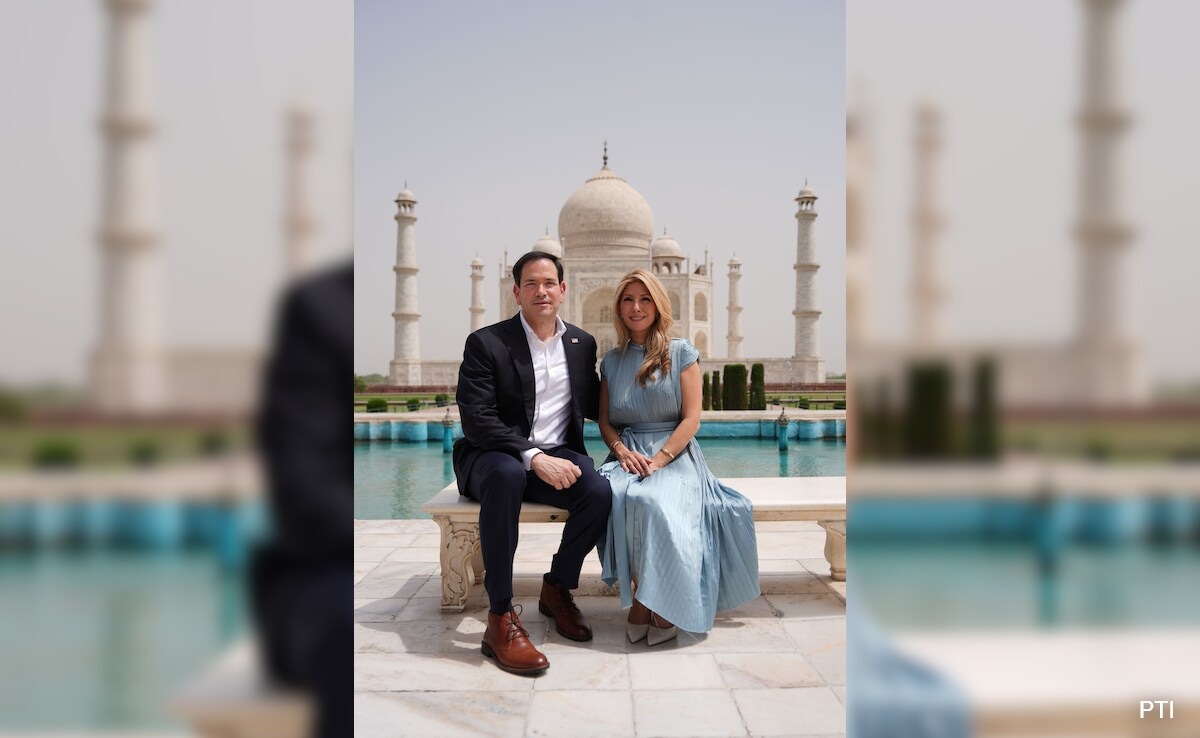
New Delhi: US Secretary of State Marco Rubio and his wife, Jeanette Rubio, paid a visit to the iconic Taj Mahal in Agra on Monday, marking a cultural interlude during his four-day official visit to India. The visit came as Rubio engaged in diplomatic discussions ahead of the Quad Foreign Ministers' Meeting, which was rescheduled to Tuesday due to logistical reasons.
Speaking to reporters in Agra, Rubio shared his impressions of the monument, calling it "one of the wonders of the world." He emphasized the importance of cultural respect during international visits. “I have never been there. The only one I ever knew about was the one in New Jersey that the President used to have,” Rubio quipped, referring to the now-defunct Trump Taj Mahal casino in Atlantic City, once owned by former US President Donald Trump. The remark drew light-hearted attention to the contrast between the two landmarks bearing the same name.
Rubio explained that a gap in his schedule created an opportunity to visit cultural sites in India. “So it was a good opportunity to see some of the cultural sites here and pay respect to this country,” he stated. He also highlighted India’s vast diversity, rich history, and cultural depth, describing the Taj Mahal as an iconic symbol of the nation. “There's so much to see here, such a big country with a lot of diversity and a tremendous history. So it'll be a good opportunity to see something that is iconic for the country,” he added.
The US Secretary of State is in India for a four-day official visit, which concludes on Tuesday with the Quad Foreign Ministers' Meeting in New Delhi. The meeting, involving foreign ministers from the United States, India, Australia, and Japan, is expected to focus on regional security, maritime cooperation, and Indo-Pacific strategy.
Rubio’s brief detour to Agra underscored the blend of diplomacy and cultural diplomacy that often accompanies high-level international visits. While the primary purpose of his trip remains the Quad meeting, his visit to the Taj Mahal reflects the broader emphasis on people-to-people and cultural connections in strengthening international partnerships.
The Taj Mahal, a UNESCO World Heritage Site and one of the New Seven Wonders of the World, has long been a symbol of India’s architectural and cultural heritage. Its white marble mausoleum, built by Mughal emperor Shah Jahan in memory of his wife Mumtaz Mahal, attracts millions of visitors annually and remains a top tourist destination in the country.
Rubio’s visit to the monument, though brief, adds a human touch to his diplomatic engagements and highlights the importance of soft power in international relations.