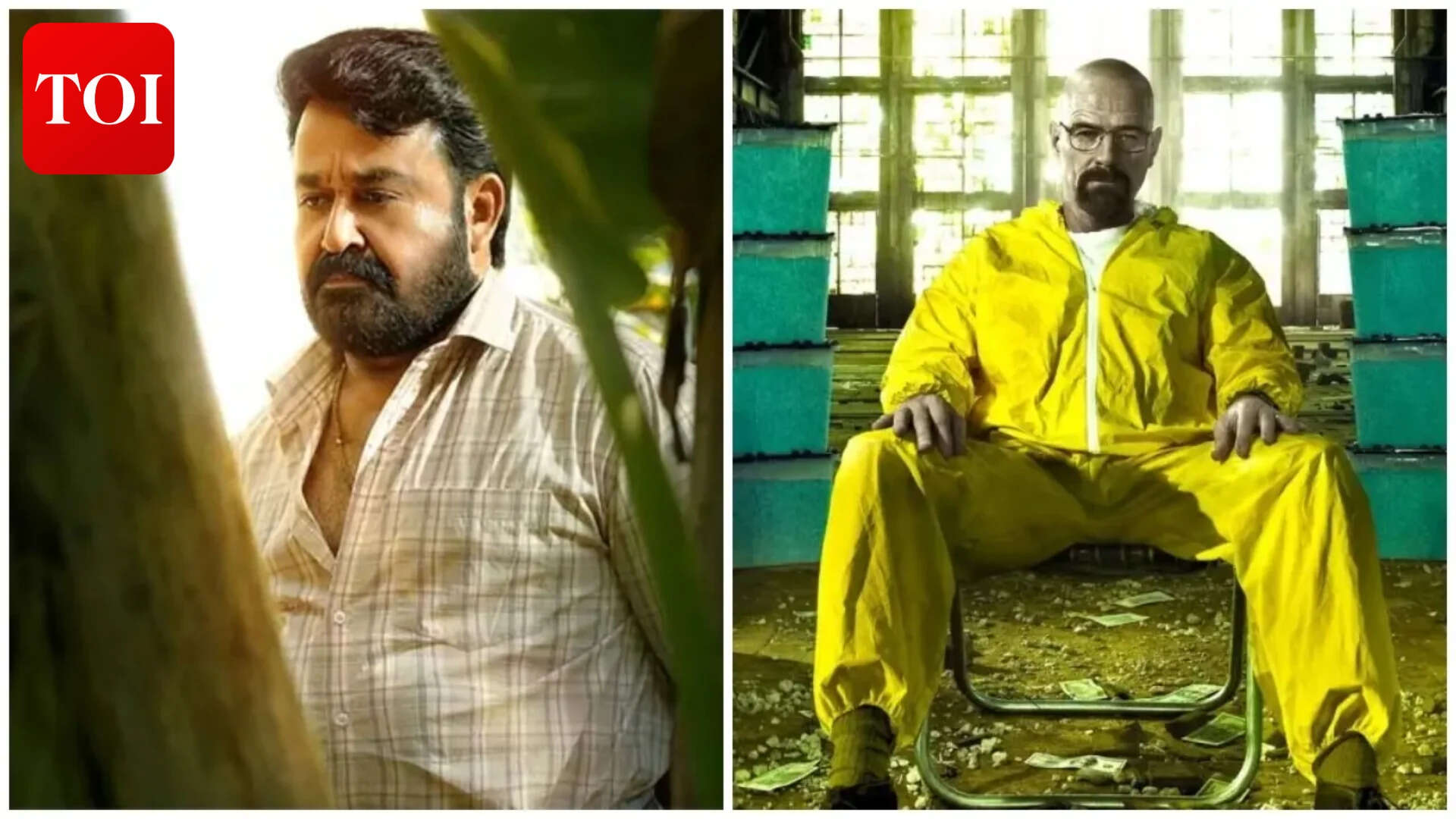
The release of *Drishyam 3* has reignited a fascinating debate among Indian film enthusiasts: Can two protagonists from vastly different worlds—one a Malayalam thriller hero, the other a TV antihero from America—share strikingly similar emotional journeys? This online discussion, which first surfaced after *Drishyam 2*, has gained fresh momentum, with audiences now dissecting the parallels between Georgekutty (Mohanlal), the protagonist of the *Drishyam* franchise, and Walter White, the chemistry teacher turned methamphetamine kingpin from *Breaking Bad*.
At the heart of the comparison lies a shared core motivation: family. Both characters undergo life-altering events that push them into morally complex territory. For Georgekutty, the turning point comes when his daughter Anju’s boyfriend, Varun, is involved in an unexpected crime, thrusting the family into a web of danger and deception. Walter White’s transformation begins with a terminal cancer diagnosis, which forces him to reconsider his role as a provider and protector. In both narratives, the central declaration—“I will go to any extent to protect my family”—echoes as a defining mantra. Georgekutty repeats this line consistently, underscoring his willingness to cross legal and ethical boundaries to shield his loved ones.
While the settings couldn’t be more different—a quiet coastal Indian family navigating a crime thriller versus a high-stakes American crime saga—the emotional arcs show surprising alignment. Walter White’s evolution is famously marked by his shift from a meek, underappreciated teacher to the ruthless “Heisenberg,” culminating in his chilling assertion, *“I am not in danger. I am the danger.”* This line has become one of the most quoted in television history and resonates with viewers who see a parallel in Georgekutty’s own emotional climax in *Drishyam 3*. Many fans, especially after the release of the third installment, felt that Georgekutty’s final decisions carried a similar weight of moral ambiguity and protective instinct.
The comparison gained traction on social media platforms like Reddit, where users shared nuanced perspectives. One Reddit user emphasized Georgekutty’s consistency: *“I don’t think Georgekutty would do anything dangerous just for the thrill of it. Everything he does is to protect his family.”* Another proposed a more layered view: *“That's how Walter started out as well. He was doing everything to support his family and then embraced his true self. Walter was always Heisenberg.”* This theory suggests that both characters begin with noble intentions but evolve into figures who embrace darker versions of themselves under pressure.
Yet, not all viewers see the similarity as exact. Some highlight key differences in their psychological journeys. One comment pointed out Walter White’s early inferiority complex—his resentment toward his students, his frustration with his mundane life, and the humiliation he faces—which fuels his transformation. In contrast, Georgekutty is portrayed as a composed, middle-class man who acts out of instinct and love rather than ego or resentment. This distinction underscores that while both characters are driven by family, their emotional triggers and moral compromises follow distinct paths.
Despite these differences, the renewed discussion reflects how powerful storytelling transcends cultural and genre boundaries. *Drishyam*, a Malayalam family thriller directed by Jeethu Joseph, and *Breaking Bad*, a globally acclaimed American crime drama created by Vince Gilligan, operate in entirely different cinematic ecosystems. Yet, audiences are finding common ground in the universal theme of sacrifice and the extremes to which a parent will go for their children. The timing of the debate—sparked by *Drishyam 3*—adds another layer, as the film’s climax introduces a significant shift in Georgekutty’s character, prompting mixed reactions and deeper analysis from fans.
As social media continues to buzz with theories and comparisons, it’s clear that great storytelling often leaves room for interpretation. Whether Georgekutty and Walter White are truly kindred spirits may remain subjective, but the conversation itself highlights how cinema can unite diverse audiences through shared emotional experiences.