Actor-politician Kangana Ranaut has shared candid insights into her unconventional career choices, attributing much of her creative direction to the deep-rooted disapproval she faced from her family during her early years in the film industry. Speaking in a recent interview with *Pen Movies* while promoting her upcoming film *Bharat Bhagya Vidhata*, Kangana reflected on how her background influenced her decisions and shaped her artistic vision.
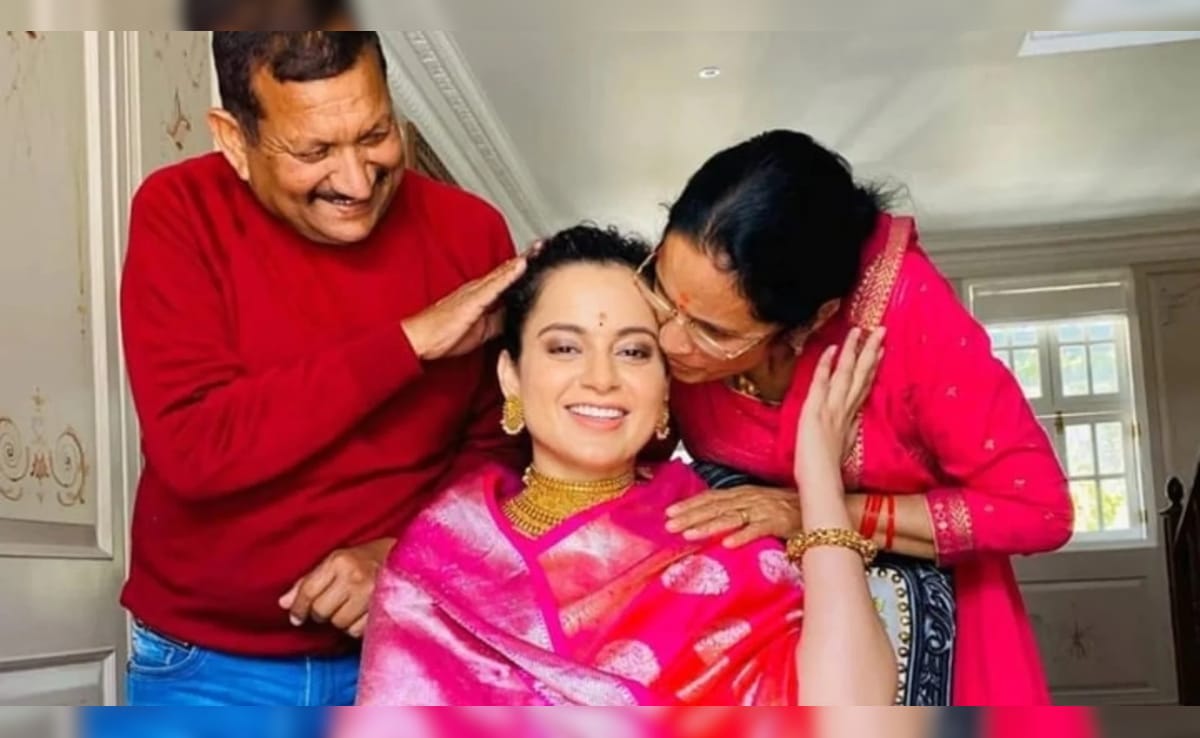
Kangana revealed that her family, rooted in an academic and political environment, viewed the film industry with strong skepticism. Her grandfather worked with the Khadi Board, and her great-grandfather was an MLA, placing immense value on education and public service. “Movies were looked down upon in our household,” she admitted. During the 1990s and early 2000s, the film industry carried a negative image, often associated with the underworld, which made her family’s acceptance of her career choice even more challenging. Despite her eventual success, her parents remained uncomfortable with her decision to join films. When she once asked her mother to come and live with her due to loneliness, her mother responded simply, “You chose this life, now figure it out yourself.”
The actor’s breakthrough film *Gangster* (2006) became a turning point—not in the way she had hoped. Recalling the hurtful reaction from her parents after watching the film, Kangana said, “My father had no reaction after watching the film. My mother’s response was, ‘Our society won’t accept this. You are underage and have done all kinds of scenes.’” She expressed deep disappointment that her parents focused solely on a few scenes rather than recognizing her performance. “I was heartbroken. Out of everything in the film, that was all she noticed,” she shared. This experience led her to stop seeking validation from her family regarding her work.
Kangana acknowledged the influence of legendary actor Amitabh Bachchan in shifting her perspective. After receiving a heartfelt letter from Bachchan praising her performance in *Queen* and other films, she realized the difference in artistic appreciation. “I couldn’t hold that against him,” she said, emphasizing that her father, not being an artist, viewed cinema through a different lens. “My father would never be able to view my work through the same lens as someone like Amitabh Bachchan because cinema simply wasn’t his world.”
The turning point in her family’s acceptance came with national recognition. Kangana won her first National Award for Best Supporting Actress for *Fashion* (2008). She later went on to win three Best Actress National Awards—for *Queen* (2014), *Tanu Weds Manu Returns* (2015), and jointly for *Manikarnika: The Queen of Jhansi* and *Panga* (2020). “When I won a National Award, my parents were genuinely happy. They felt proud that their daughter was being honoured by the President of India. That was a turning point for my father. And when I received the Padma Shri, it became even more significant,” she shared. These accolades helped her family view her career with pride and respect.
Kangana clarified that she was not judging others’ career choices but acknowledged how one’s upbringing inevitably shapes decisions. “I’m not saying something is right or wrong. But our surroundings shape us,” she said. Her early struggles drove her to consciously avoid roles that objectified women, such as item numbers, and instead focus on films that emphasized women’s empowerment, individuality, and agency. “Coming from such a conservative background, I made a conscious decision not to do item numbers and instead focus on films that spoke about women, empowerment, and individuality. I wanted to be worthy of my lineage,” she explained.
Her upcoming film, *Bharat Bhagya Vidhata*, continues this thematic focus. Directed by Manoj Tapadia, the film is inspired by real events and shifts attention from conventional depictions of violence to the resilience and humanity displayed within a government hospital during a crisis. The story highlights how nurses, ward boys, cleaners, lift operators, security personnel, and administrative staff came together to save 400 lives inside Cama Hospital during a terror attack, while chaos unfolded outside. The film also stars Girija Oak, Smita Tambe, Amrutha Namdev, Esha Dey, Priya Berde, and Asha Shelar. It is scheduled for release on June 12.
Through her journey, Kangana Ranaut has transformed personal rejection into a powerful artistic vision, using her platform to champion meaningful cinema and challenge societal norms.