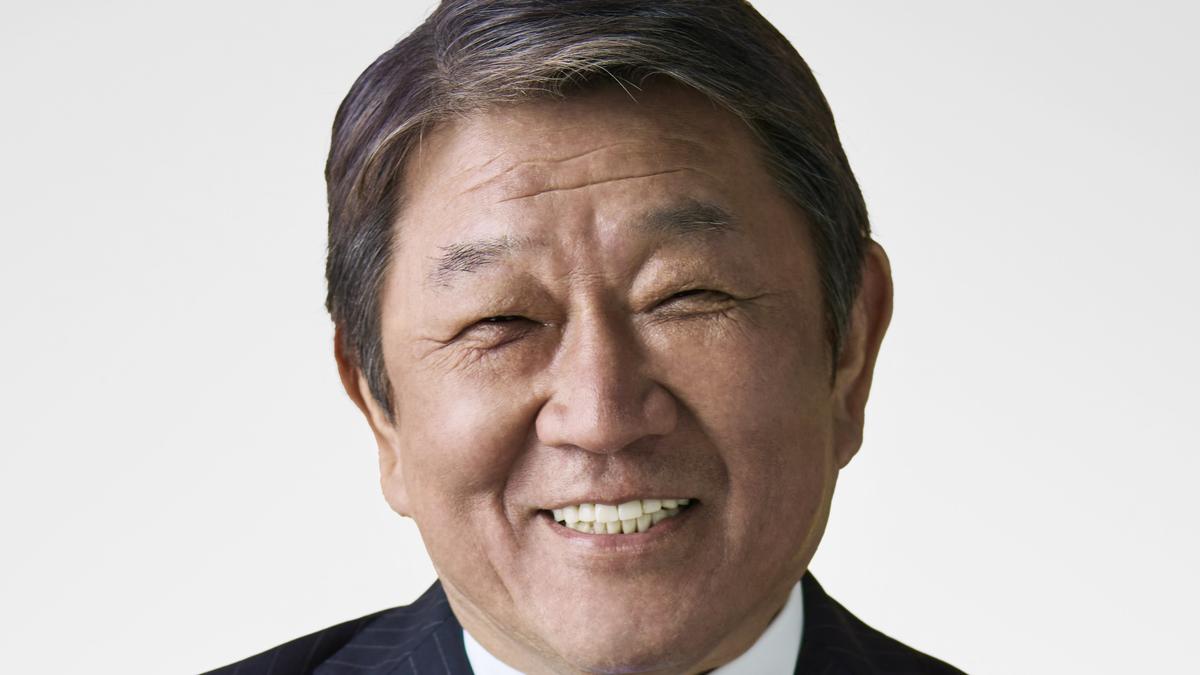
Japan’s Foreign Minister Toshimitsu Motegi has strongly reaffirmed the Quadrilateral Security Dialogue (Quad) as a “vital framework” while addressing concerns over its diminishing visibility in recent strategic documents. Speaking ahead of the Quad Foreign Ministers’ Meeting (FMM) scheduled for May 25, 2026, in New Delhi, Motegi emphasized that cooperation on “Critical Minerals” essential for green energy and high-technology industries will be the centerpiece of discussions.
The upcoming Quad meeting, hosted by India’s External Affairs Minister S. Jaishankar, will bring together Motegi, U.S. Secretary of State Marco Rubio, and Australian Foreign Minister Penny Wong. The agenda is expected to include a review of regional conflicts, such as the ongoing crisis in Iran and the blockade of the Strait of Hormuz, as well as the implications of U.S. President Donald Trump’s recent visit to China. Additionally, the ministers are likely to set the stage for the next Quad Summit, which has not convened since 2024 due to strained India-U.S. relations on multiple fronts.
Despite the Quad’s active engagements in 2025—including two ministerial meetings—recent national security and strategic documents from the U.S., Australia, and Japan have made only passing or limited references to the grouping. For instance, the U.S. National Security Strategy released in November 2025 acknowledged the Quad’s role in promoting Indo-Pacific security but did not elaborate on future plans. Similarly, Japan’s updated “Free and Open Indo-Pacific” (FOIP) policy, unveiled by Prime Minister Sanae Takaichi during a visit to Hanoi on May 2, 2026, mentioned the Quad only once, specifically in connection with the critical minerals initiative.
Motegi, responding to questions from The Hindu in written statements, underscored the Quad’s tangible achievements across maritime security, economic security, and cybersecurity. He acknowledged the grouping’s relevance but declined to explain why it has received scant mention in recent strategic documents. When asked whether the U.S.’s March 4, 2026, military action against an Iranian vessel in the Indian Ocean—the IRIS Dena—would be discussed, Motegi refrained from commenting directly. Instead, he stated that the ministers would review “regional and global situations” and convey a unified message supporting the Quad’s continued role in advancing a Free and Open Indo-Pacific (FOIP).
In parallel, Japan has been advancing its own regional energy and resource resilience initiative. In April 2026, Prime Minister Takaichi proposed the “Partnership On Wide Energy and Resources Resilience (POWERR Asia),” a virtual forum attended by Jaishankar. The initiative aims to coordinate procurement, financing, and storage strategies for oil, gas, and renewable energy, addressing supply chain disruptions exacerbated by the Iran conflict. Motegi highlighted the critical importance of energy and resource supply routes, especially through the Strait of Hormuz, noting that Asian nations are among the most affected by disruptions.
The focus on critical minerals reflects growing apprehensions over China’s dominant control of the global rare earth market—China holds vast reserves, processes approximately 90 percent of these minerals, and has imposed export restrictions on several countries. Japan has actively engaged with India on critical minerals since the 2010s, including investments in rare earth refining projects. Motegi expressed strong interest from Japanese companies in India’s semiconductor sector but stressed the need for India to strengthen intellectual property protections, expand tax incentives, and improve infrastructure to facilitate these investments.
Japan’s commitment to regional connectivity was further underscored as Motegi confirmed ongoing collaboration with Bangladesh’s newly elected Prime Minister Tarique Rahman on the development of the Matarbari deep-sea port. This project is part of broader efforts to enhance connectivity linking Bangladesh with India’s northeast, Bhutan, and Nepal, reinforcing Japan’s FOIP strategy.