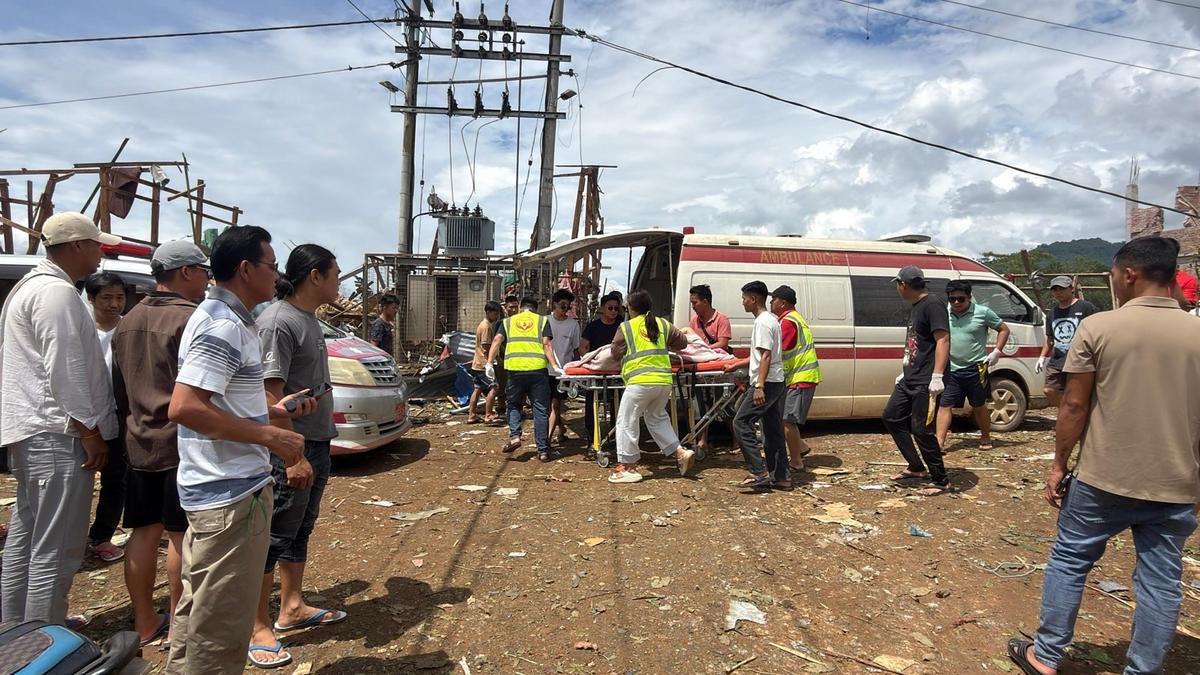
Rescue and charity groups in Myanmar’s northeastern Shan State have intensified recovery efforts after a deadly blast from stored mining explosives tore through a village on Sunday, killing at least 38–40 people and leaving the area shrouded in grief and uncertainty. The explosion occurred at noon on May 31, 2026, in Kaungtup village, Namhkam Township, near the Chinese border, and has since drawn national and international attention to the risks of unregulated mining and the ongoing conflict involving ethnic armed groups.
Local rescue volunteers, including members of the Ta’ang women’s organization, are working alongside excavators to retrieve fragmented remains from the blast site. Initial reports had suggested up to 45 deaths, but local volunteers now estimate the toll at 38–40 due to the severity of the explosion, which shattered bodies and complicated recovery efforts. The Ta’ang National Liberation Army (TNLA), an ethnic armed group controlling the Namhkam area, stated that the blast involved gelignite, a common mining explosive that becomes highly unstable when stored improperly over time. Residents of the 200-household village reported they were never informed that explosives were being stored nearby, raising serious concerns about safety protocols in the region.
The blast has highlighted the dangers of Myanmar’s largely unregulated mineral industry, particularly in resource-rich areas controlled by ethnic militias engaged in ongoing clashes with the central government. The TNLA, part of the Three Brotherhood Alliance, seized control of Namhkam in late 2023 during a major offensive against the military government. While the TNLA had signed a China-mediated ceasefire with the military in late 2023, peace remains fragile, and mineral extraction continues to fund both rebel groups and the central government amid the broader turmoil following the February 2021 military coup that ousted Aung San Suu Kyi’s elected government.
Investigations into the cause of the explosion are ongoing. The TNLA confirmed the blast involved gelignite used in local mining and stone quarrying. Nearby residents told The Associated Press that mines producing raw materials for silicon metal — a key industrial substance used in semiconductors, solar panels, and aluminum alloys — are located about 15 kilometers southwest of Namhkam town. These mines are reportedly operated jointly by the TNLA and Chinese businessmen, though access is restricted for most local residents. The AP could not independently verify these claims.
Myanmar’s mining sector is a major global supplier of rare earth elements, copper, tin, and precious gems such as jade and rubies, with much of the output exported to China for processing and refining. The incident has underscored China’s complex role in Myanmar, balancing its support for the military-backed government with ties to ethnic minority groups. Chinese Foreign Ministry spokesperson Lin Jian expressed deep condolences and confirmed that a Chinese national injured in the blast is receiving medical treatment. Beijing has pledged assistance in managing the aftermath.
The explosion is the latest in a series of mining-related accidents in Myanmar’s conflict zones, where unregulated operations and poor safety standards have led to frequent landslides and industrial disasters. As rescue teams continue their grim work, the tragedy has reignited debates over the need for stricter oversight of the country’s extractive industries and the humanitarian consequences of prolonged armed conflict.