•Siddaramaiah resigned as Karnataka Chief Minister on Thursday, May 29, 2026, with Deputy CM D.K. Shivakumar touching his feet in a gesture of respect
•Both leaders were seen discussing the power transfer during a meeting at the AICC office in Delhi on May 27, 2026
•Despite factional tensions within the Karnataka Congress, Siddaramaiah and Shivakumar have consistently projected unity in public
•Their public displays of camaraderie include embracing, raising hands together, and hosting breakfast meetings to defuse tensions
•In November 2025, they hosted mutual breakfast meetings ahead of the Winter Session in Belagavi to present a united front
•Siddaramaiah recently mentioned in the Assembly that a silk shawl he wore was a gift from Shivakumar
•The smooth transition follows four years of public bonhomie, starting from the run-up to the 2023 assembly elections
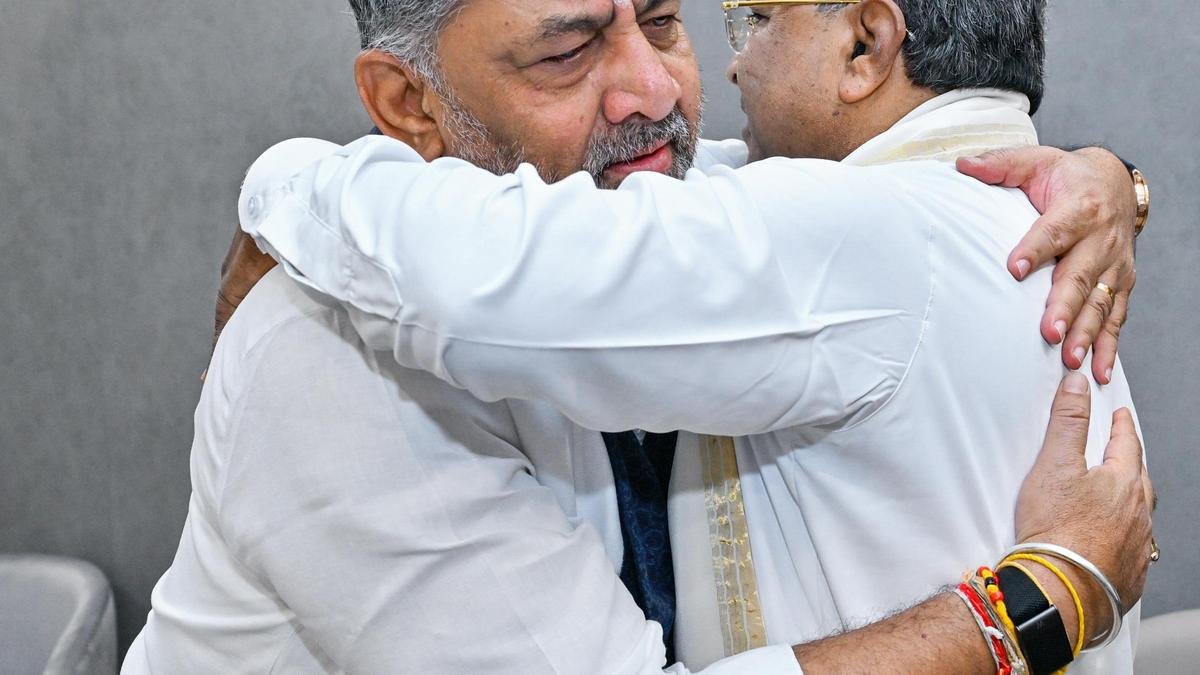
Bengaluru, May 29, 2026 — In a display of longstanding political camaraderie, Karnataka Chief Minister Siddaramaiah formally resigned from his post on Thursday, while Deputy Chief Minister D.K. Shivakumar publicly demonstrated respect by touching his feet—a symbolic gesture that underscored the unity within the Congress party despite internal factional dynamics.
The resignation marked the culmination of a smooth transition process that had been widely anticipated following the state assembly elections. Sources noted that even during a high-level meeting at the All India Congress Committee (AICC) office in Delhi on Tuesday—where both leaders were present to discuss the transfer of power—they were seen engaged in constructive dialogue. The mutual respect between the two leaders was further highlighted when photographs captured Shivakumar touching Siddaramaiah’s feet and the two leaders embracing warmly after the resignation announcement.
While the Congress leadership in Karnataka has often been described as divided between the Siddaramaiah and Shivakumar factions, their public displays of unity have consistently overshadowed internal differences. Despite occasional public statements from supporters of both leaders that appeared to target the other, Siddaramaiah and Shivakumar have repeatedly diffused tensions by appearing together in public, often raising their hands to signal solidarity.
One of the most notable instances of their public bonhomie occurred in November 2025, when a fracas erupted over the transfer of power. To present a united front ahead of the Winter Session in Belagavi, both leaders hosted breakfast meetings for each other, reaffirming their commitment to party cohesion.
Siddaramaiah, in a lighter moment during a recent Assembly session, even mentioned that the silk shawl he was wearing was a gift from Shivakumar—a small but telling detail that reflected the personal rapport between the two leaders.
The smooth transition of power, which had initially raised concerns about possible discord, has now been completed without disruption. Observers attribute this to the carefully managed public image of unity maintained by both leaders over the past four years, a period that includes the run-up to the 2023 assembly polls.
Political analysts suggest that the visible harmony between Siddaramaiah and Shivakumar has played a crucial role in maintaining stability within the Congress government in Karnataka. Despite underlying factional interests, the leadership’s ability to project a cohesive front has helped sustain public trust and party discipline.
As Karnataka prepares for the next phase of leadership under the Congress banner, the transition serves as a case study in managing internal party dynamics while ensuring continuity in governance.