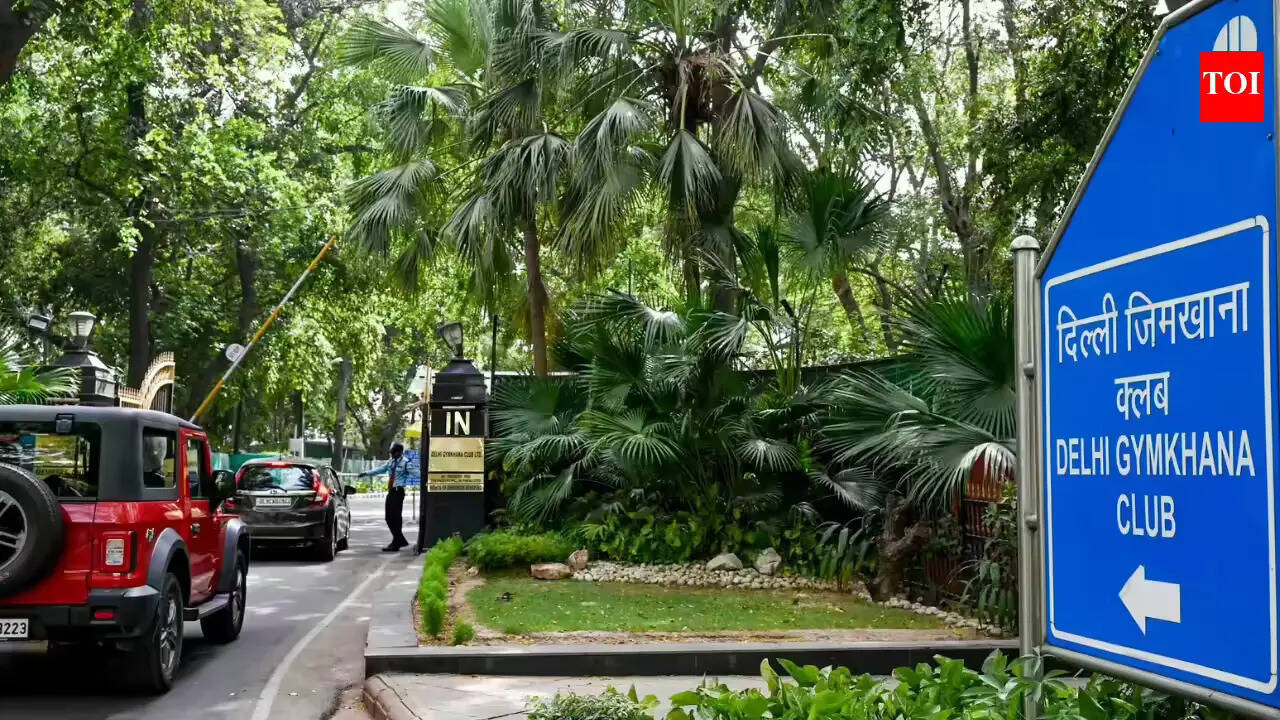
•Centre orders Delhi Gymkhana Club to vacate 27.3-acre plot in Lutyens’ Delhi by June 5 citing defence and public security needs.
•The eviction order was issued on May 22 by the Land & Development Office under the Union Housing and Urban Affairs Ministry.
•Congress leader Rashid Alvi alleges the move is politically motivated due to Rahul Gandhi’s membership in the club.
•Delhi Gymkhana Club was founded on July 3, 1913, as the Imperial Delhi Gymkhana Club and later became a post-independence social and sporting hub.
•Club members moved the Delhi High Court on May 26 seeking urgent relief against the eviction deadline; hearing scheduled for May 27.
•The government claims the land is in a highly sensitive area and is now required for strengthening defence infrastructure.
•The club has urged a meeting with ministry officials and expressed its intent to continue operations without dislocation.
New Delhi, May 26 — A fresh controversy erupted on Sunday after the Union Housing and Urban Affairs Ministry directed the Delhi Gymkhana Club to vacate its sprawling premises in central Delhi by June 5, failing which the government said it would take possession under legal provisions. The eviction order, issued on May 22 through the Land and Development Office (L&DO), cites “urgent public purpose and national interest” and claims the 27.3-acre plot—located in a “highly sensitive and strategic area”—is now critically required for strengthening defence infrastructure and public security.
The club, which traces its origins to July 3, 1913 as the Imperial Delhi Gymkhana Club, has been a landmark institution catering to social and sporting activities for over a century. After India’s independence in 1947, the word “Imperial” was dropped, though most of its heritage structures date back to the 1930s. The club is situated on Safdarjung Road in Lutyens’ Delhi, an area known for its proximity to key government and diplomatic establishments.
Amid the government’s move, Congress leader Rashid Alvi alleged that the eviction was politically motivated and linked it to the membership of Rahul Gandhi in the club. Speaking to the media on Sunday, Alvi termed the action “unfortunate” and claimed that the club’s decision to enrol Gandhi as a member had invited the Centre’s wrath. “The fact that Rahul Gandhi is a member of the Delhi Gymkhana Club is enough to destroy it,” he said. “What can be a greater fault of the Gymkhana Club committee than that it made Rahul Gandhi a member and did not make people considered close to the Prime Minister as members. This is enough to demolish it and take it over,” he alleged.
The Ministry’s order, however, makes no mention of any individual but emphasizes the strategic nature of the land. It states that the plot was originally leased to the Imperial Delhi Gymkhana Club Ltd.—now Delhi Gymkhana Club Ltd.—for maintaining a social and sporting club. But it now asserts that the location falls within a “highly sensitive and strategic area” and is required for “strengthening and securing defence infrastructure and other vital public security purposes.”
In response to the government directive, members of the Delhi Gymkhana Club approached the Delhi High Court on Monday, seeking urgent relief against the June 5 deadline. The matter was mentioned before Justice Avneesh Jhingan by senior advocate Abhishek Singhvi, and the court has listed the case for hearing on Tuesday (May 27). The club has expressed its desire to continue operations without disruption and has sought a meeting with officials from the Ministry of Housing and Urban Affairs.
Founded during the British colonial era to serve British administrators and military officers, the club evolved into a premier social and sporting venue post-independence. Despite its historical legacy, the current crisis highlights the growing tensions between heritage institutions and government land-use priorities in central Delhi.
As legal and political battles intensify, the club’s members, legal team, and political stakeholders prepare for a high-stakes hearing in the High Court, with the June 5 deadline looming large over the 113-year-old institution.