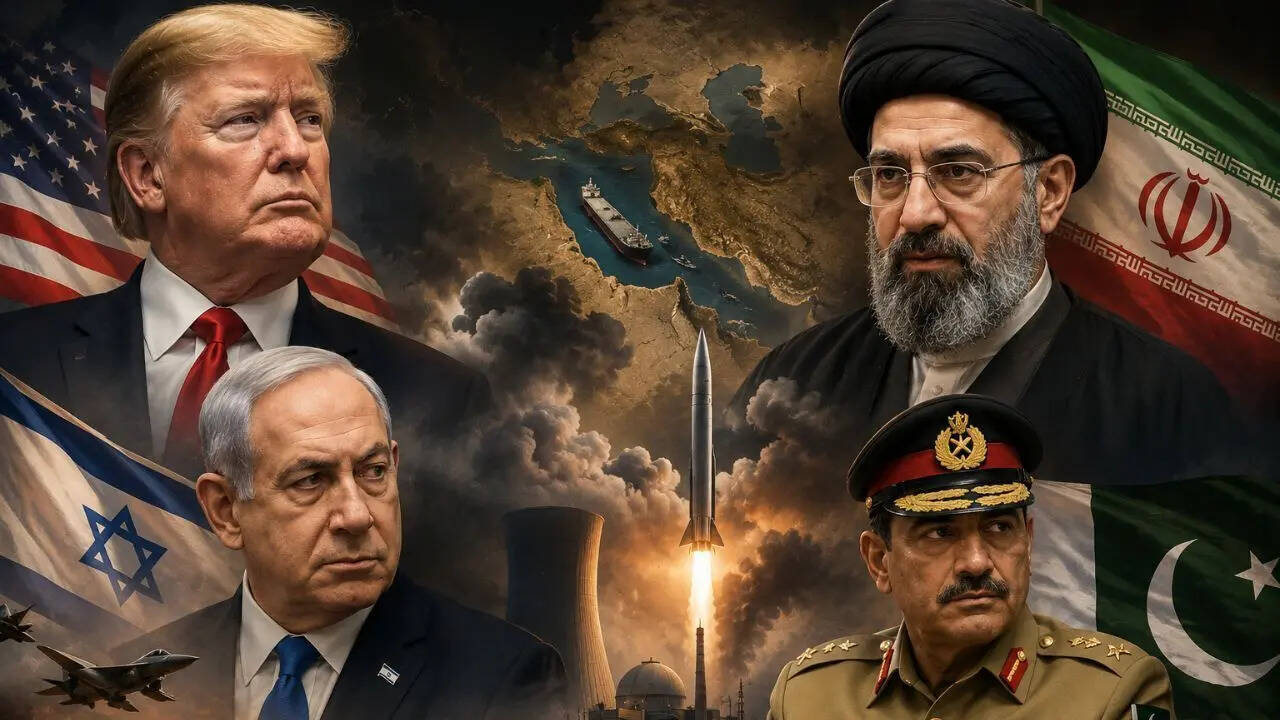
Nearly three months after military strikes by the United States and Israel triggered a fresh crisis in the Middle East, negotiations between Washington, Jerusalem, and Tehran remain deadlocked. Despite repeated claims from both sides about progress, no final agreement has been reached. The proposed framework, if implemented, could end the ongoing conflict, reopen the Strait of Hormuz, ease sanctions on Iranian oil exports, and pave the way for new talks on Iran’s nuclear program. However, deep disagreements over uranium enrichment levels, sanctions relief, regional influence through groups like Hezbollah, and the governance of Lebanon continue to stall progress.
On Monday, US Secretary of State Marco Rubio, speaking in New Delhi, acknowledged that uranium enrichment and the reopening of the Strait of Hormuz are central to the negotiations. Rubio described the current proposal as a “pretty solid thing on the table,” suggesting that Iran could be incentivized to open the strait and enter into time-limited nuclear negotiations. He emphasized that the United States would either secure a “good agreement” with Iran or pursue “another way,” while stressing that Washington would exhaust diplomatic options before considering alternatives. Rubio cautioned, however, that a broader nuclear deal could not be finalized quickly, stating, “A nuclear deal couldn't be achieved in 72 hours on the back of a napkin.”
US President Donald Trump has sent mixed signals regarding the state of negotiations. On Saturday, he claimed on Truth Social that the deal had been “largely negotiated” and that final details were being discussed, with an announcement expected “shortly.” Less than 24 hours later, Trump appeared to temper expectations, stating that he had instructed his representatives not to rush into a deal, as “time is on our side.” He stressed the importance of getting the agreement right, warning, “There can be no mistakes!” Trump also reiterated that the US naval blockade on Iran would remain in place until a formal and certified agreement was signed.
From Tehran’s perspective, the negotiations are framed not as a surrender under military pressure but as a strategic effort to end the conflict while safeguarding Iran’s sovereign rights and national security interests. Iranian Foreign Ministry spokesman Esmaeil Baghaei confirmed that both sides had reached conclusions on several issues but cautioned that a final agreement was still far from imminent. Baghaei emphasized that the current focus is on ending the war and easing economic and maritime pressures, rather than negotiating away Iran’s nuclear program. He also accused the United States of repeatedly shifting its positions during negotiations, which has complicated efforts to finalize an agreement.
Iranian President Masoud Pezeshkian reiterated that Tehran does not seek nuclear weapons but refused to commit to abandoning uranium enrichment or dismantling its nuclear infrastructure. He stated that Iran remains ready to assure the world that its nuclear program is peaceful and that the country retains a legitimate right to nuclear technology. Iran’s embassy in India echoed this stance, describing nuclear technology as an “inalienable” right that Iran “will never relinquish.” Meanwhile, Mohsen Rezaei, a senior adviser to Iran’s Supreme Leader, declared that managing the Strait of Hormuz is Tehran’s “legal right” and essential for national security. He stated, “Our fighters have their hands on the trigger today, and our negotiators are working to secure the rights of the Iranian people.”
The reopening of the Strait of Hormuz has emerged as an immediate priority for the United States and Gulf countries. The strategic waterway, which carries nearly one-fifth of the world’s oil and gas shipments, has been severely disrupted due to Iranian controls on Gulf shipping and the US naval blockade. Under the proposed agreement, Iran would gradually reopen the strait while the United States would lift its blockade on Iranian ports. However, Tehran insists on retaining sovereign authority over maritime access and shipping routes through the strait. Iranian state-linked media outlets and Revolutionary Guard-affiliated platforms have rejected reports suggesting that Iran had agreed to unconditionally reopen the strait or surrender its uranium stockpile. Instead, Iran is pushing for a new regional governance mechanism over the strait rather than returning to the pre-war status quo.
The simultaneous military threats and diplomatic negotiations underscore the high stakes involved. While a ceasefire between Iran and the US has largely held since April 8, both sides continue to negotiate from positions of pressure and leverage. The unresolved issues—particularly uranium enrichment and the governance of the Strait of Hormuz—remain significant obstacles. With neither side willing to compromise on core demands, the path to a final agreement appears increasingly complex.