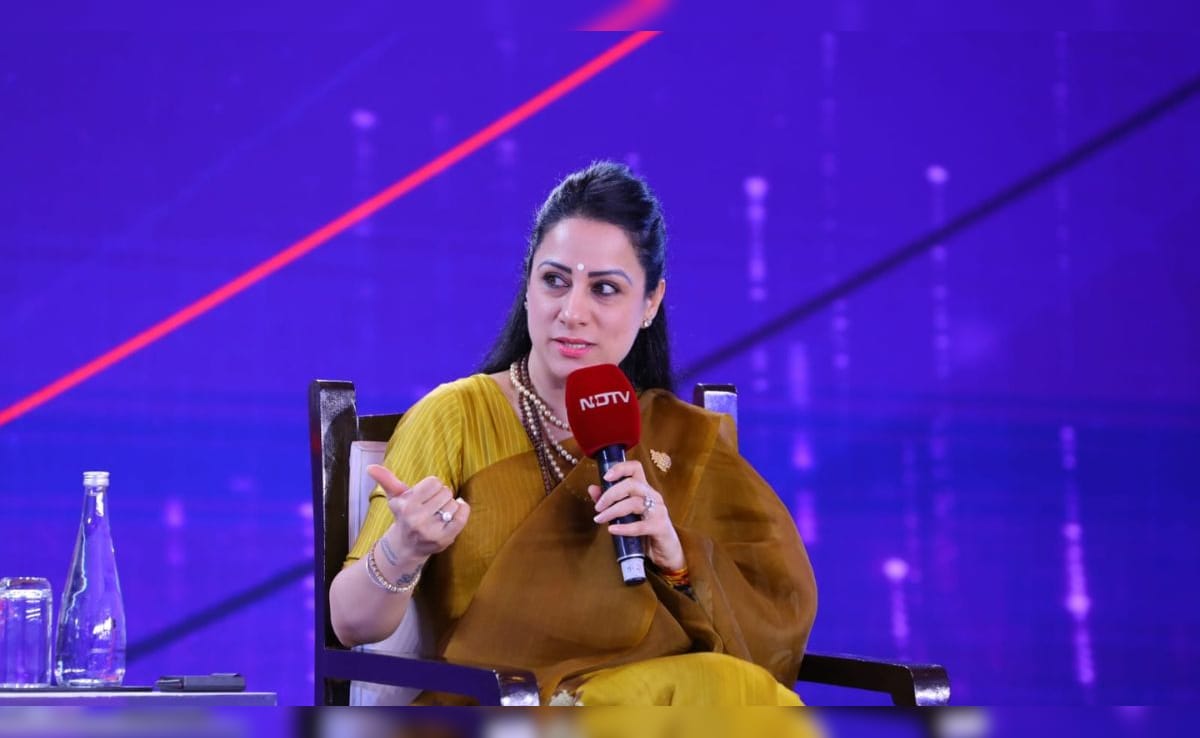
Artist and social worker Rouble Nagi recently shared a deeply moving experience during her speech at the NDTV LearnNXT Conclave. She recounted how a six-year-old child, who had never held or even seen a pencil in their life, became a turning point in her journey toward improving literacy and education access for underprivileged children across India.
Speaking at the educational conclave, Nagi described how the encounter occurred during one of her visits to a low-income community. The child’s complete unfamiliarity with a basic school supply like a pencil left her stunned and motivated her to take action. “It was heartbreaking to see a child who didn’t know what a pencil was,” she said. “That moment made me realize how far behind many children are in terms of access to even the most basic educational tools.”
Nagi, who is also the founder of Rouble Nagi Art Foundation (RNAF), has been running multiple initiatives focused on art-based education and literacy programs in marginalized communities since 2011. Her foundation has reached over 15,000 children across Mumbai, Delhi, and other parts of India. Through programs like “Paint the Wall” and “My School My Voice,” RNAF uses art, storytelling, and community engagement to make learning more inclusive and engaging for children who lack access to formal education.
The NDTV LearnNXT Conclave, held recently, brought together educators, policymakers, and social leaders to discuss innovative approaches to improving learning outcomes in India. Nagi’s story resonated strongly with the audience, highlighting the urgent need for equitable access to education and the power of arts in transforming young lives. She emphasized that literacy is not just about reading and writing, but also about dignity, self-belief, and empowerment.
In closing, Nagi stressed the importance of collective action. “Every child deserves the chance to hold a pencil, to dream, and to learn,” she said. “It’s not just about providing resources, but about changing mindsets and creating opportunities where none existed before.”