Chandrayaan-2 Detects Subsurface Ice in Permanently Shadowed Lunar Craters, Boosting Moon Mission Prospects
मुख्य बातें
- •Chandrayaan-2 orbiter detects subsurface ice in permanently shadowed lunar craters using DFSAR radar.
- •Ice preserved at -248°C in "doubly-shadowed" regions that never receive sunlight.
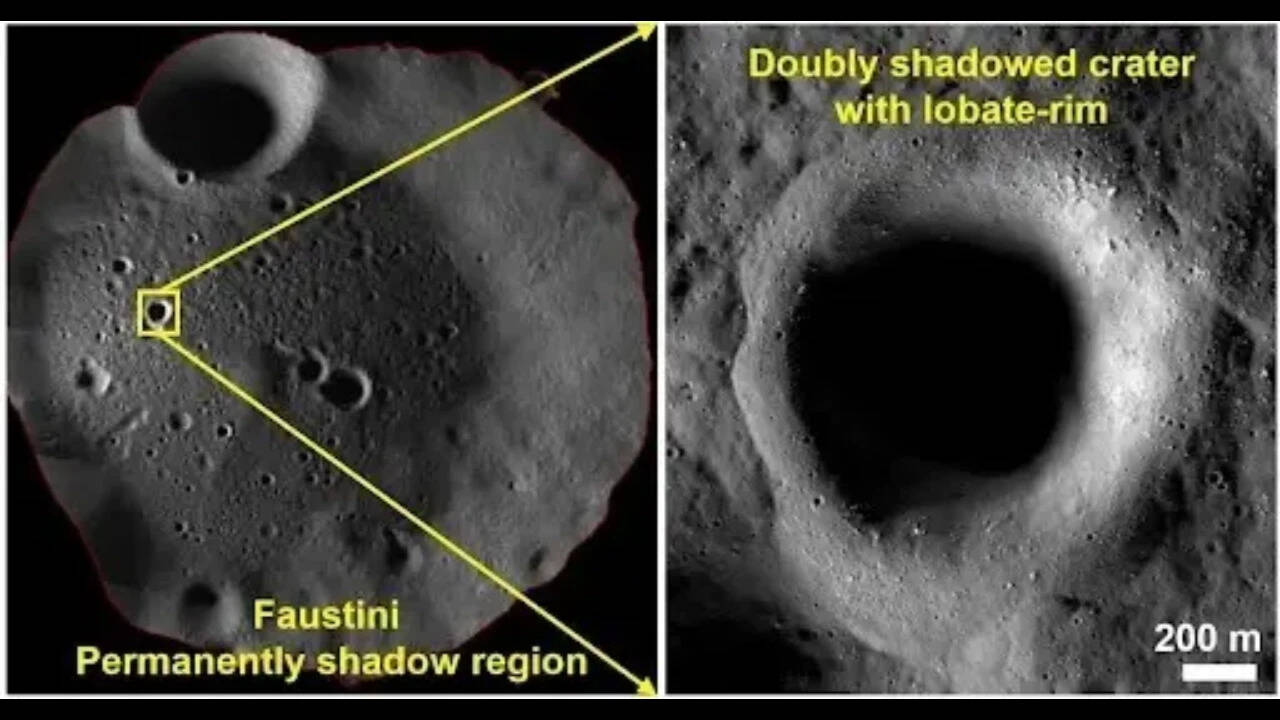
- •A 1.1 km crater inside Faustini shows strongest evidence, with lobate rim suggesting past ice exposure.
- •Findings published in *npj Space Exploration*, led by Physical Research Laboratory, Ahmedabad.
- •Ice could provide water and fuel for future Moon bases, supporting Artemis, China’s, and India’s lunar missions.
BENGALURU: India’s Chandrayaan-2 mission has uncovered compelling evidence of water ice hidden beneath the surface of permanently shadowed craters near the Moon’s south pole, a discovery that could play a pivotal role in supporting future human exploration and long-term lunar bases. The findings, published this week in the journal *npj Space Exploration*, were made by a team of researchers from the Physical Research Laboratory (PRL) in Ahmedabad, who analyzed high-resolution radar data collected by the Chandrayaan-2 orbiter since it began circling the Moon in 2019.