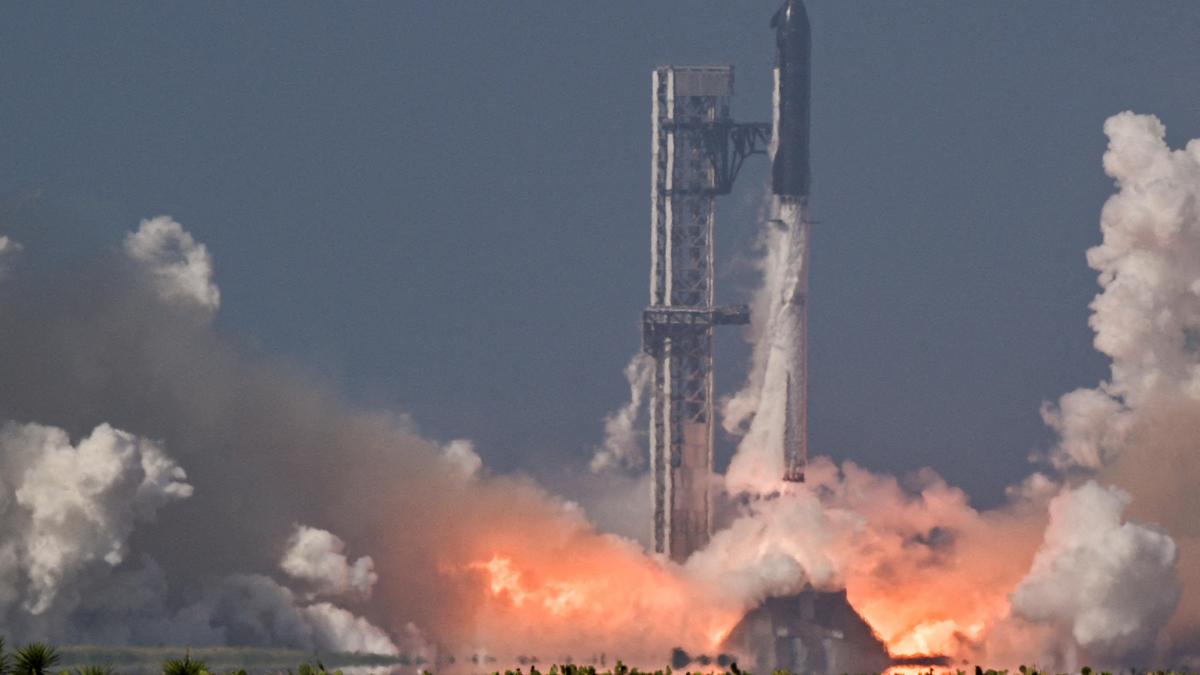
SpaceX’s latest Starship test flight, launched on May 22, 2026, from Starbase in Texas, encountered a critical failure during the return of its Super Heavy booster, prompting the Federal Aviation Administration (FAA) to initiate an investigation. The 407-foot (124-meter) rocket, the largest and most powerful Starship developed by SpaceX, lifted off as planned but experienced engine failure in the booster stage during its descent. The incident has temporarily halted all further Starship launches pending the outcome of the probe.
According to the FAA, the hour-long spaceflight was classified as a mishap due to the booster’s unplanned hard landing in the Gulf of Mexico, instead of the intended controlled splashdown. Minutes after liftoff, the booster separated successfully, but its engines failed during the return phase, causing it to crash. Despite the failure, the spacecraft continued its mission, completing a full orbit around Earth. During the flight, it deployed 20 mock satellites as part of the test objectives before concluding the mission with a planned splashdown in the Indian Ocean.
The FAA confirmed that there were no reports of injury or property damage resulting from the incident. The agency will oversee SpaceX’s internal investigation into the failure, as required under standard procedure for rocket mishaps. SpaceX has not yet released detailed technical findings, but the company is expected to cooperate fully with the regulatory body.
This test flight was significant as it marked the twelfth attempt by SpaceX to validate the Starship system, which is central to Elon Musk’s vision of human missions to Mars. Beyond interplanetary ambitions, NASA is counting on Starship to play a key role in its Artemis program. The space agency plans to use a modified version of the spacecraft to land astronauts on the Moon as early as 2028 and support the construction of a sustainable lunar base. Any delays or setbacks in Starship’s development could impact NASA’s timeline for lunar exploration.
The failure comes amid growing scrutiny of SpaceX’s rapid testing approach, which prioritizes iterative development but has also led to several high-profile mishaps. While previous Starship tests have achieved milestones such as reaching space and surviving re-entry, this latest incident highlights ongoing challenges in the rocket’s operational reliability, particularly in the booster recovery phase.
Pending the FAA’s investigation and SpaceX’s corrective actions, all Starship launches remain grounded. The outcome of this probe will be critical in determining when SpaceX can resume testing and whether adjustments are needed to ensure the safety and success of future missions. For now, the company’s ambitious goals—both for Mars and the Moon—face an uncertain timeline.