Tensions between Israel and Hezbollah escalated sharply on May 24–25, 2026, after an Israeli soldier was killed by a Hezbollah drone strike in southern Lebanon, prompting calls from far-right Israeli ministers for large-scale military retaliation against Beirut. Israeli Finance Minister Bezalel Smotrich, leader of the far-right National Religious Party, publicly demanded that Prime Minister Benjamin Netanyahu authorize airstrikes targeting apartment buildings in Beirut in response to each explosive drone launched by Hezbollah. Speaking after the soldier’s death on Sunday, May 24, 2026, Smotrich stated, “The explosive drones harming our fighters are not a decree of fate. For every explosive drone, 10 buildings should fall in Beirut.” His remarks were reiterated during a cabinet meeting the same day, according to Israeli media reports.
Despite the pressure, Netanyahu reportedly rejected Smotrich’s proposal and opted for defensive measures instead. A spokesperson for the Prime Minister declined to comment on the internal deliberations. Smotrich, a key figure in Netanyahu’s coalition, has a history of making statements that go beyond official government policy, including repeated calls for Israel to annex both southern Lebanon and the Gaza Strip.
Another ultranationalist minister, Itamar Ben Gvir of the Jewish Power party, echoed Smotrich’s stance, urging Netanyahu to escalate military action and directly confront U.S. President Donald Trump over the situation. “It is time for the Prime Minister to bang on (President Donald) Trump’s desk and tell him that we are returning to war in Lebanon,” Ben Gvir said. His comments reflect growing frustration within the Israeli far-right over the perceived ineffectiveness of current responses to Hezbollah’s drone campaign.
Hezbollah has increasingly relied on First Person View (FPV) kamikaze drones—cheap, easy-to-assemble unmanned systems controlled via fiber-optic cables—to evade Israel’s advanced electronic warfare and jamming systems. These drones have been used to target Israeli troops occupying southern Lebanon, even during a fragile ceasefire announced on April 16, 2026, a week after a broader truce in the Iran-Israel conflict took effect. While Israel has carried out strikes in southern Lebanon, including one earlier this month that killed a Hezbollah commander in Beirut’s southern suburbs, there have been no direct attacks on central Beirut or its surroundings since the April 16 ceasefire.
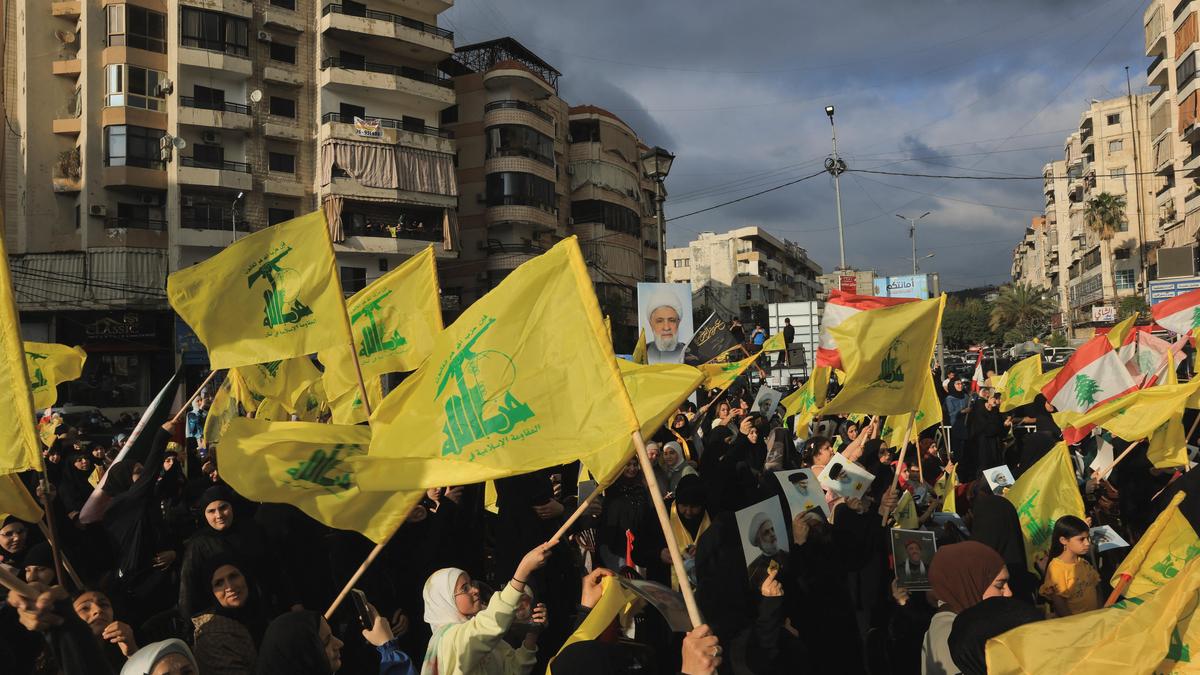
On May 25, 2026, Hezbollah organized a large public rally in Beirut’s southern suburbs to commemorate the 26th anniversary of Liberation Day, marking Israel’s withdrawal from southern Lebanon in 2000. Hezbollah’s second-in-command, Naim Qassem, used the occasion to intensify rhetoric against Lebanon’s government, stating that citizens had the right to protest and even overthrow the state. However, he stopped short of explicitly calling on Hezbollah supporters to stage such actions.
In response to the drone threat, Smotrich announced the approval of a 2 billion shekel ($693 million) budget to develop technological solutions aimed at countering the attacks. “The response to a significant threat must be significant,” he said, emphasizing the need to “change the rules and the equation.” Israeli media also reported that military chief of staff Eyal Zamir supported striking buildings in Beirut in retaliation for drone attacks, though a military spokesperson declined to confirm his remarks.
Political observers note that Smotrich’s party is currently struggling in polls and faces the risk of failing to cross the electoral threshold in Israel’s upcoming election, potentially weakening his influence. Nonetheless, his aggressive stance highlights deep divisions within Israel’s leadership over how to handle Hezbollah’s evolving tactics and the broader security challenges along the northern border.