Myanmar’s military has escalated its offensives into multiple border regions, including areas rich in rare earth minerals and critical trade routes, just one month after a new administration assumed formal control of the conflict-torn nation. According to spokespeople for ethnic armed groups and independent analysts, the military, under new leadership, is pursuing an aggressive campaign to retake strategic border strongholds that have been held by ethnic armies in recent years.
The offensive operations are concentrated in three key border regions: Kachin State, which borders China and is rich in heavy rare earth deposits essential for industries such as wind turbines and electric vehicles; Chin State, which borders India; and Karen State, home to a major trade corridor with Thailand. On May 18, 2026, the military announced the recapture of Falam town in Chin State and control over an important roadway between Mandalay and Myitkyina in Kachin State, according to the state-run *Global New Light of Myanmar* newspaper.
Military analyst Sai Kyi Zin Soe explained the strategic intent behind the campaign: “The military's strategic rationale is that they need to regain control over the primary communication and trade routes in Myanmar. We can see that the military is desperately trying to recapture towns that host border trade gates.” However, a spokesperson from Myanmar’s presidential office declined to comment, and Reuters noted it could not independently verify the military’s claims due to restricted media access in conflict zones.
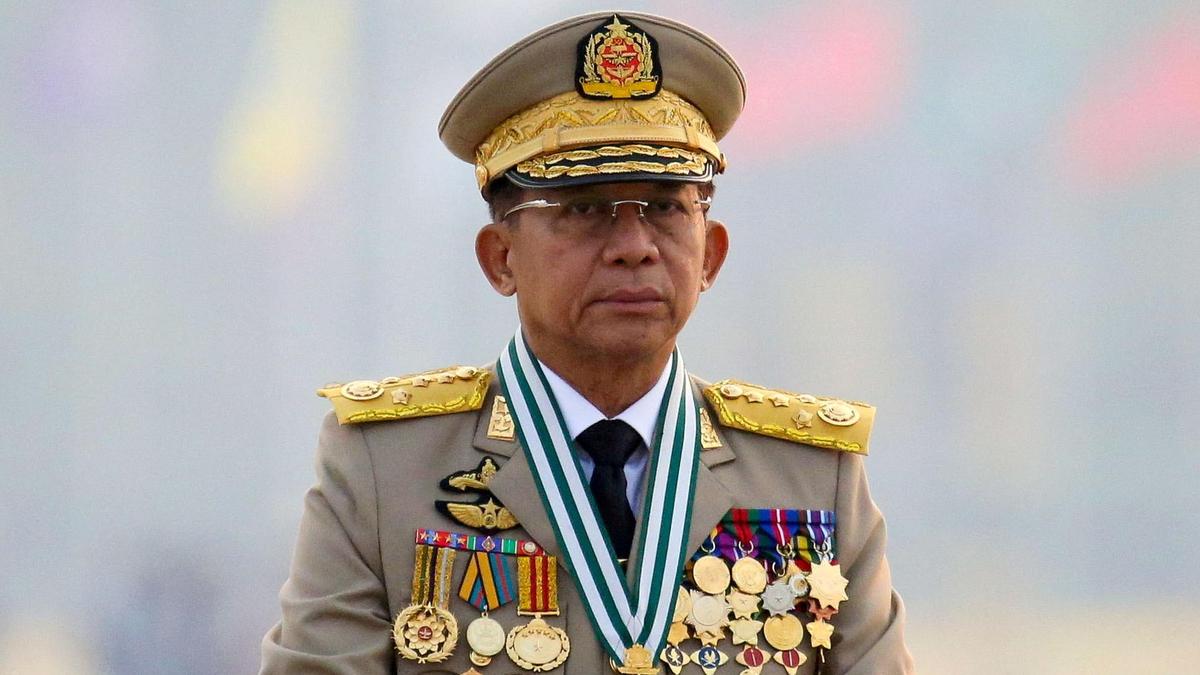
The renewed offensives follow a controversial peace proposal made by President Min Aung Hlaing in April 2026, in which he demanded that rebel groups enter peace talks within 100 days. The proposal was immediately rejected by multiple ethnic armed organizations. The conflict in Myanmar escalated after the military staged a coup in February 2021, overthrowing the democratically elected government led by Aung San Suu Kyi, a Nobel Peace laureate. Since then, the military has faced a nationwide resistance movement supported by various ethnic armies, resulting in the loss of significant territory across the country.
In Kachin State, the military is seeking to regain control of mining belts near the Chinese border—regions that supply approximately half of the world’s heavy rare earth elements. Naw Bu, spokesperson for the Kachin Independence Army (KIA), which captured parts of the area in October 2024, stated, “We will welcome them with the barrels of our guns,” indicating strong resistance. The KIA has fortified defenses around Chipwi and Pangwa townships.
Meanwhile, in Chin State along the Indian border, the military has intensified airstrikes and ground operations to seize Falam and Tonzong towns, which serve as key logistical hubs for opposition groups. Salai Van, a spokesperson for the Chin National Front, reported that resistance fighters have conducted strategic retreats under heavy bombardment. The military’s aerial campaign has been powered in part by illicit jet fuel supplies from Iran, which have enabled over 1,000 airstrikes on civilian areas in the past 15 months, according to previous Reuters investigations.
In Karen State, the military is targeting the Myawaddy-Kawkareik highway, a vital trade route with Thailand that has seen fierce fighting since the Karen National Union (KNU) captured the border town of Myawaddy in 2024. Saw Taw Nee, a KNU spokesperson, criticized the military’s approach: “The military has repeatedly and continuously violated pledges along the path to peace and paid no heed to agreements. Therefore, it goes without saying that there is a complete absence of trust. Whatever they attempt, it is bound to fail.”
The escalation of military operations comes as the junta seeks to reassert control over key economic and strategic zones amid a prolonged civil war that has reshaped Myanmar’s political and territorial landscape since 2021.