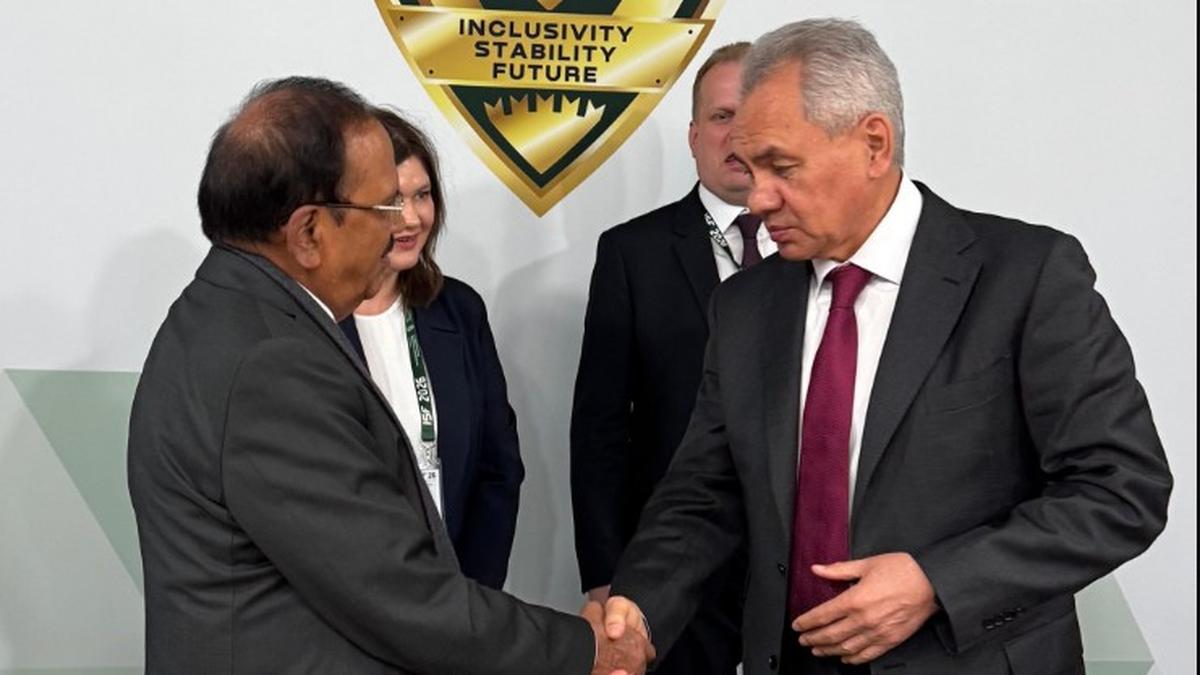
New Delhi, 28 May, 2026: National Security Adviser (NSA) Ajit Doval ne Thursday ko international community se terrorism ke khilaaf ek unified aur decisive approach adopt karne ki appeal ki hai. Unhone counter-terrorism efforts mein kisi bhi prakar ke double standards ko reject kar diya. Moscow ke pehle International Security Forum mein bolte hue, Doval ne is baat par zor diya ki responsible nations ko clear choice lena hoga—ya to terrorism ke state sponsors ko support karna hai, ya phir un networks ko dismantle karne ke liye resolute action lena hai. Unke remarks Sergei Shoigu ke hosted high-level gathering ke dauran aaye, jo “Challenges and Threats to International Security in the context of the Emergence of the Multipolar World” par focused tha.
Doval ne post-World War II international institutions—jo 1945 mein establish hue the—ko reform karne ki urgent need bhi highlight ki, taaki unhe modern security threats ko address karne mein zyada effective banaya ja sake. Unhone is baat par zor diya ki ye reforms Global South ke liye better representation aur unke perspectives ko include karne chahiye, jo ki global affairs mein developing nations ke rising influence aur shifting geopolitical landscape ko reflect karega.
Forum ke dauran, Doval ne Shoigu se side-line par milkar India aur Russia ke beech defense, security, energy aur economic sectors mein chal rahi cooperation ko review kiya. Dono sides ne evolving global challenges ke beech apne bilateral ties ko strengthen karne par discuss kiya. Doval 29 May, 2026 ko aur bilateral meetings karne wale hain, lekin Indian Embassy ne Moscow ne in engagements ke baare mein aur koi details disclose nahi ki.
NSA ka ye forum participation West Asia mein heightened geopolitical tensions ke backdrop mein hua. Unhone key international waterways—jaise Strait of Hormuz aur Red Sea—ke zariye trade ke safe aur uninterrupted movement ko ensure karne ki critical importance par zor diya. Ye chokepoints global energy flows aur commercial shipping ke liye bahut zaroori hain, jo ki world ke energy supplies aur trade ka significant share carry karte hain. Recent disruptions—jaise Strait of Hormuz ka teen mahine tak ka blockade—se energy prices, supply chains aur economic stability par concerns badh gaye hain, jo Asia aur beyond tak impact kar rahe hain.
Doval ki Russia visit 27 May, 2026 ko Cyprus mein India ke External Affairs Minister S. Jaishankar aur Ukraine ke Foreign Minister Andrii Sybiha ke beech hue meeting ke baad aayi hai. Dono ministers ne Russia-Ukraine conflict, recent battlefield developments aur “comprehensive aur lasting peace” ki taraf efforts par discuss kiya. Sybiha ne ek social media post mein crisis ko address karne mein Europe ke growing role ko welcome kiya aur peace efforts mein India ke strong voice aur constructive input contribute karne ki potential ki appreciation ki.
India ne Ukraine conflict ke dauran ek balanced diplomatic stance maintain kiya hai, dialogue aur diplomacy ki advocate karte hue, lekin Russia aur Ukraine dono ke saath strong relations banae rakhe hain. Ye approach New Delhi ke broader foreign policy—strategic autonomy aur multiple global partners ke saath engagement—ke saath align hai.
Moscow forum global security architecture mein broader shifts ko reflect karta hai, kyunki major powers ek multipolar world order ke beech apne strategies ko recalibrate kar rahe hain. Russia-Ukraine war, jo ab apne paanchve saal mein hai, international relations ko strain kar raha hai, global supply chains ko disrupt kar raha hai aur multilateral security frameworks ke future par debates ko fuel kar raha hai.
West Asia mein tensions aur global powers ke beech strategic competition intensify hone ke saath, Doval ka participation international cooperation ko foster karne aur equitable aur effective global governance structures ki advocate karne ke India ke commitment ko signal karta hai.