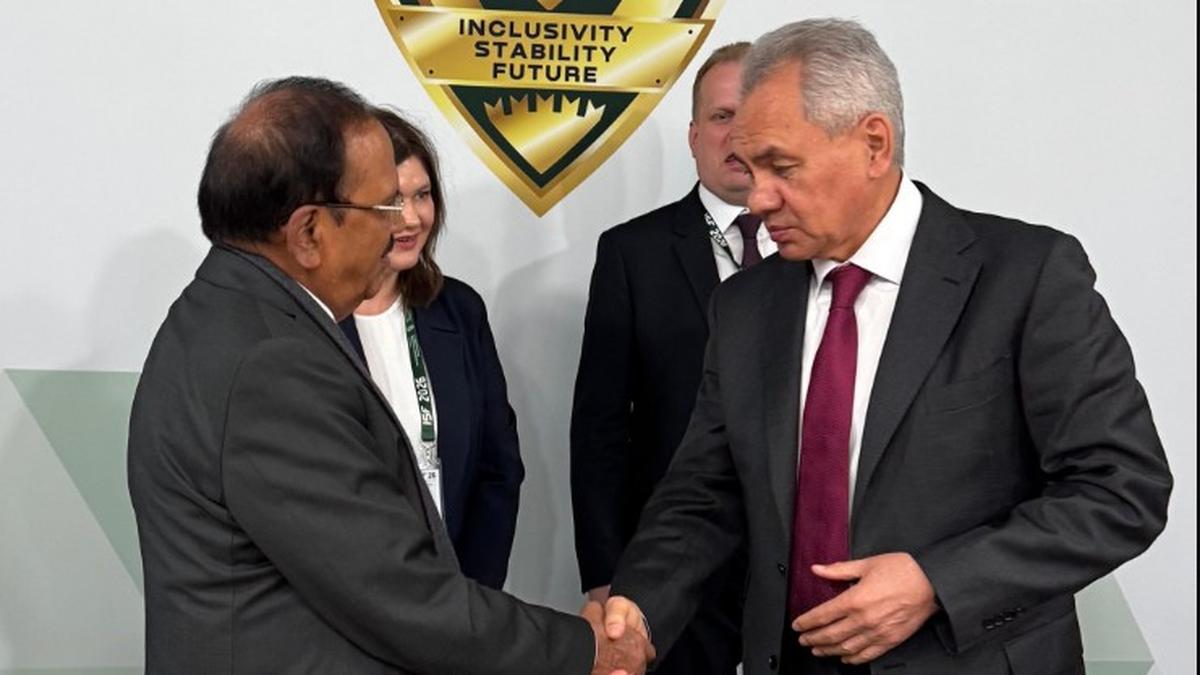
New Delhi, May 28, 2026: National Security Adviser Ajit Doval on Thursday urged the international community to adopt a unified and decisive approach against terrorism, rejecting any form of double standards in counter-terrorism efforts. Speaking at the first International Security Forum in Moscow, Doval emphasized that responsible nations must clearly choose between supporting state sponsors of terrorism or taking resolute action to dismantle such networks. His remarks came during a high-level gathering hosted by Sergei Shoigu, Secretary of the Security Council of the Russian Federation, which focused on “Challenges and Threats to International Security in the context of the Emergence of the Multipolar World.”
Doval also underscored the urgent need to reform post-World War II international institutions—established in 1945—to make them more effective in addressing modern security threats. He stressed that these reforms must enhance representation for and incorporate the perspectives of the Global South, reflecting the shifting geopolitical landscape and the rising influence of developing nations in global affairs.
During the forum, Doval met with Shoigu on the sidelines to review ongoing cooperation between India and Russia across defense, security, energy, and economic sectors. The two sides discussed strengthening bilateral ties amid evolving global challenges. Doval is scheduled to hold additional bilateral meetings on May 29, 2026, though the Indian Embassy in Moscow did not disclose further details about these engagements.
The NSA’s participation in the forum occurred against a backdrop of heightened geopolitical tensions, particularly in West Asia. He highlighted the critical importance of ensuring the safe and uninterrupted movement of trade through key international waterways, including the Strait of Hormuz and the Red Sea. These chokepoints are vital to global energy flows and commercial shipping, carrying a significant share of the world’s energy supplies and trade. Recent disruptions—including a three-month blockade of the Strait of Hormuz—have raised concerns over energy prices, supply chains, and economic stability across Asia and beyond.
Doval’s visit to Russia follows a meeting in Cyprus on May 27, 2026, between India’s External Affairs Minister S. Jaishankar and Ukraine’s Foreign Minister Andrii Sybiha. The two ministers discussed the ongoing Russia-Ukraine conflict, recent battlefield developments, and efforts toward achieving a “comprehensive and lasting peace.” Sybiha, in a social media post, welcomed Europe’s growing role in addressing the crisis and expressed appreciation for India’s potential to contribute a strong voice and constructive input in peace efforts.
India has maintained a balanced diplomatic stance throughout the Ukraine conflict, advocating for dialogue and diplomacy while sustaining strong relations with both Russia and Ukraine. This approach aligns with New Delhi’s broader foreign policy of strategic autonomy and engagement with multiple global partners.
The Moscow forum reflects broader shifts in the global security architecture, as major powers recalibrate their strategies amid a multipolar world order. The ongoing Russia-Ukraine war, now in its fifth year, continues to strain international relations, disrupt global supply chains, and fuel debates over the future of multilateral security frameworks.
As tensions persist in West Asia and strategic competition intensifies among global powers, Doval’s participation signals India’s commitment to fostering international cooperation while advocating for equitable and effective global governance structures.