In the quiet, unassuming landscape of Lindow Moss near Wilmslow in Cheshire, northwest England, lies one of Britain’s most haunting archaeological sites. For millennia, this peat bog remained a working landscape—where generations cut peat for fuel—until the 1980s, when machinery uncovered something far older and far more chilling: human remains preserved in the acidic, oxygen-poor peat.
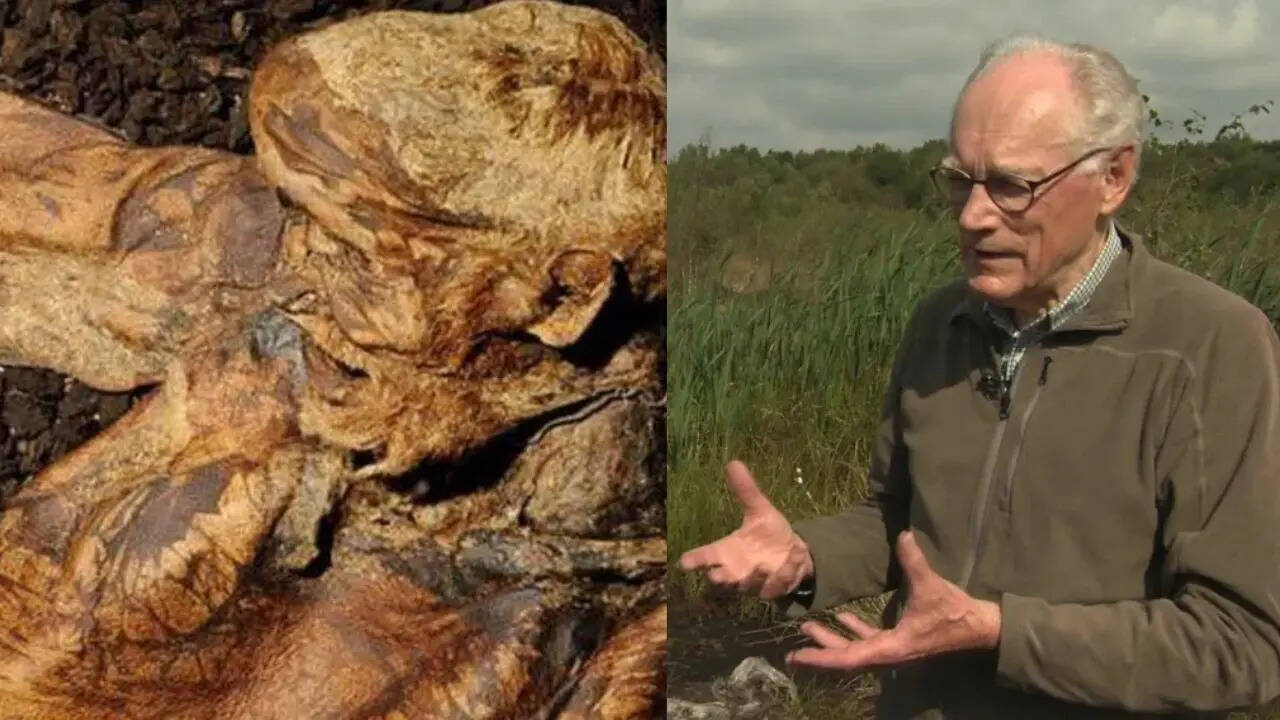
The first shock came in May 1983, when workers operating peat-processing machinery noticed a dark lump moving through the conveyor system. At first dismissed as a piece of wood or a "prehistoric egg," the object turned out to be a human head. The skin still clung to the skull, hair remained attached, and one eye was partially preserved—despite centuries underground. The discovery was so lifelike that it stunned investigators. Police quickly linked the find to Peter Reyn-Bardt, a local man suspected in the disappearance of his wife, Malika Maria de Fernandez. While Reyn-Bardt confessed to her murder, forensic analysis revealed the head dated back to the Roman period—around 2,000 years ago—proving it was unrelated to the modern case. The murder confession stood, but the ancient head introduced a new mystery.
Just over a year later, in 1984, another discovery deepened the enigma. A worker noticed a fragment of wood among the peat, which, upon cleaning, revealed human tissue and toenails. Archaeologists swiftly intervened, carefully excavating a large intact section of peat. What emerged was a nearly complete human body—subsequently named Lindow Man. His preservation was extraordinary: skin, soft tissue, and even internal organs survived. The body’s condition reflected the unique chemistry of peat bogs, where low oxygen, high acidity, and cold temperatures slow decomposition, often preserving hair, skin, and even facial features for millennia. Such discoveries are rare but not unique in Northern Europe, where hundreds of "bog bodies" have been found—most famously Tollund Man in Denmark.
Radiocarbon dating placed Lindow Man’s death between 2 BC and AD 119, during the late Iron Age or early Roman period in Britain. Analysis suggested he was in his late twenties, of good health, and possibly of higher social status—his well-maintained fingernails and groomed hair hinting at care beyond that of a laborer. Yet his death was violent. His remains bore multiple injuries: blows to the head, severe neck trauma, and a clear cut across the throat. Some marks suggested strangulation or garrotting. While the violence appears deliberate, the sequence of events remains debated. Advanced imaging later confirmed at least one head injury occurred while he was alive, with evidence of brain swelling indicating he survived briefly after being struck.
The most compelling—and contested—interpretation of Lindow Man’s death is ritual sacrifice. Traces in his digestive system included materials some researchers link to ceremonial practices, and possible residues of copper compounds on his skin suggest ritual anointing. Such "triple killings"—involving strangulation, throat-cutting, and blunt-force trauma—are seen in other European bog bodies and are theorized as part of Iron Age ritual traditions. Yet not all experts agree. Ancient societies were capable of brutal violence outside of ritual contexts, and some scholars argue the injuries could reflect execution, punishment, or even a violent conflict. Classical Roman writers described northern European peoples using wetlands for sacrifices and punishments, but these accounts were written by outsiders during periods of conquest and may contain bias or exaggeration.
Lindow Man’s discovery transformed Lindow Moss into a site of national archaeological significance. Unlike many fragmentary finds, his body offered a rare glimpse into Iron Age life and death. Yet, like many bog bodies, his story remains incomplete. Without eyewitness accounts, written records, or a clear cultural context, archaeologists must piece together clues from bones, tissue, and environment. The bog has preserved him—but it has also shrouded his final moments in ambiguity.
Decades after his unearthing, Lindow Man continues to puzzle researchers, challenge assumptions about Iron Age Britain, and captivate the public imagination. His preserved face, once mistaken for modern, now stares across two millennia, a silent witness to a violent past buried beneath the peat.