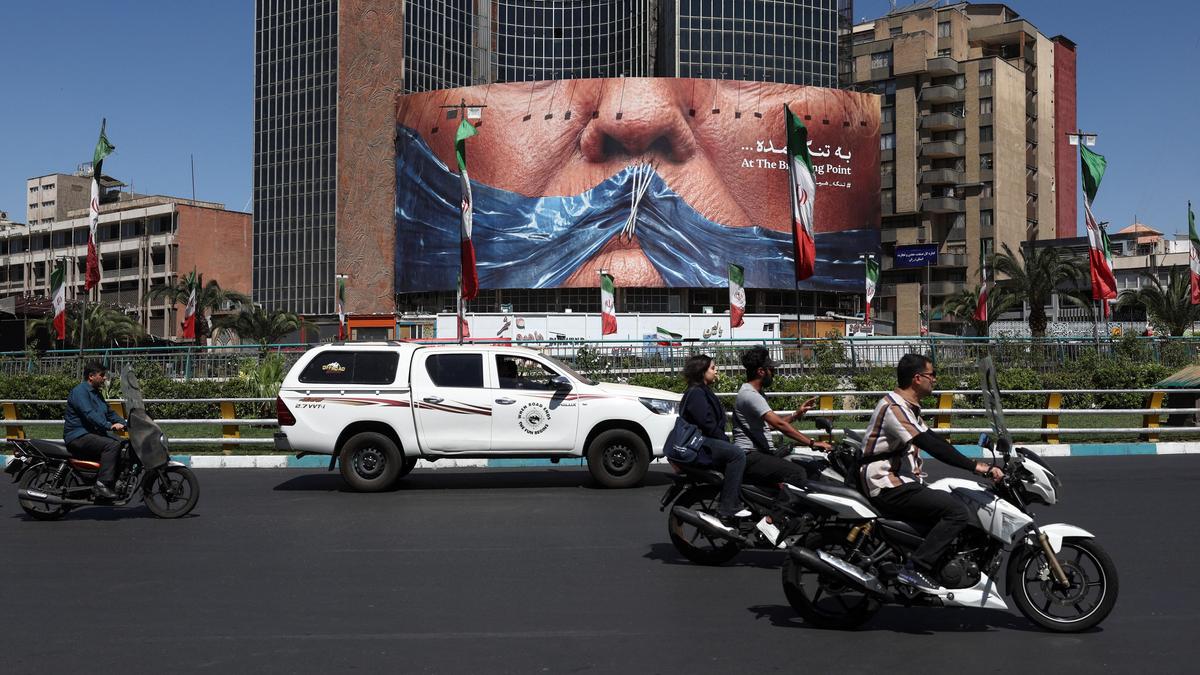
Tehran, May 26, 2026 – Iran has accused the United States of breaching a fragile ceasefire after overnight U.S. airstrikes targeted Iranian missile sites and boats allegedly laying mines in the Persian Gulf. The escalation threatens to derail ongoing peace talks in Qatar and has sent global oil markets into turmoil, with Brent crude prices surging over 4% following the announcement by U.S. Central Command.
The strikes, conducted in southern Iran near the Strait of Hormuz, were framed by Washington as “self-defense” to protect its troops from what it described as imminent threats posed by Iranian forces. According to Tim Hawkins, a spokesman for U.S. Central Command, the targets included missile launch sites and vessels attempting to “emplace mines.” The U.S. statement did not specify casualties or damage. In response, Iran’s Foreign Ministry condemned the attacks as “illegal and unjustified,” asserting that Washington had committed a “gross violation” of the April 8 ceasefire in the Hormozgan region. Iran vowed to respond decisively, stating it would “not leave any evil unanswered.”
Iranian state media reported blasts in Bandar Abbas, a key port city near the Strait of Hormuz, a critical chokepoint for global oil shipments. The country’s Revolutionary Guards also claimed to have shot down a U.S. drone that entered Iranian airspace and fired upon an F-35 fighter jet. These actions deepen the already tense standoff between the two nations, which have been locked in indirect conflict since February 28, when U.S.-Israeli airstrikes triggered a broader regional war.
Despite the military escalation, U.S. Secretary of State Marco Rubio told reporters in New Delhi on May 26 that a peace deal remained “within reach.” However, he emphasized Washington’s firm stance on the Strait of Hormuz, calling Iran’s actions “unlawful, illegal, and unsustainable.” Rubio acknowledged ongoing negotiations in Qatar, describing them as discussions over “specific language in the initial document,” which he said could take “a few days” to finalize. He warned that the Strait of Hormuz “will be open one way or the other,” signaling that U.S. pressure on Iran to restore free passage would not waver.
On the economic front, the U.S. strikes have raised concerns about regional stability. The maritime safety monitor UKMTO reported that a tanker off the coast of Oman suffered damage from an “external explosion,” though the crew and vessel were reported safe. China, a major energy importer and geopolitical rival to the U.S., urged both sides to respect the ceasefire and resolve their disputes peacefully. “We urge the parties concerned to fulfil their ceasefire commitments, resolve disputes through peaceful means... and promote the early restoration of peace,” said Chinese Foreign Ministry spokeswoman Mao Ning.
The peace process has also been complicated by developments in Lebanon. Israeli Prime Minister Benjamin Netanyahu vowed on May 25 to “crush” Hezbollah, and Israeli military officials confirmed on May 26 that ground operations inside Lebanon had been expanded beyond the previously declared “Yellow Line,” now reaching 10 kilometers into the country. Iran, which backs Hezbollah, has insisted that any peace accord must include provisions for the conflict in Lebanon, further complicating negotiations.
Amid the turmoil, there was a rare piece of positive news for Iranians: internet services experienced a “partial restoration” after nearly three months of a nationwide blackout—the longest in modern history, according to monitoring group NetBlocks. Iran’s Vice-President confirmed that the first steps had been taken to restore connectivity, calling it a fulfillment of public demands. However, a 22-year-old woman from Kermanshah told reporters that while she could now access international websites, she still required a VPN to use social media, indicating that full restoration had not yet been achieved.
The latest crisis underscores the fragile state of the ceasefire and the high stakes involved in the negotiations. With oil prices rising, regional tensions escalating, and both sides digging in their positions, the path to lasting peace remains uncertain.